

Short Questions:
Zoonotic diseases are caused by viruses, bacteria, parasites, or fungi that normally live in animals but can infect humans. They can spread through direct contact with animals, consuming contaminated food or water, or via insect bites.
For Example; rabies, salmonella, Lyme disease, and COVID-19 (which likely originated in animals). These diseases are important because they can cause serious health problems and sometimes lead to outbreaks or pandemics.
Types of Pathogens with Examples:
| Type of Pathogen | Example |
|---|---|
| Bacteria | Salmonella typhi |
| Viruses | SARS-CoV-2 (the coronavirus) |
| Fungi | Dermatophytes (e.g. Trichophyton species causing ringworm) |

| Protozoa | Plasmodium (malaria parasite) |
| Helminth Parasites | Ascaris lumbricoides (roundworm) |
Non-infectious diseases are not caused by pathogens and cannot spread from person to person. These include:
- Physiological diseases (e.g., type 2 diabetes, cancer)
- Genetic disorders (e.g., sickle cell anaemia, colour blindness)
- Autoimmune diseases (e.g., type 1 diabetes, rheumatoid arthritis)
- Nutritional deficiency diseases (e.g., scurvy, rickets)
- Environmental diseases (e.g., lung cancer from smoking, skin cancer from UV rays)
- Degenerative diseases (e.g., osteoarthritis, Alzheimer’s disease)
- Psychological disorders (e.g., anxiety disorders, depression)
Diabetes affects the body in many ways due to high blood sugar levels over time.
- Eyes (Retinopathy): Can damage blood vessels in the retina, leading to vision problems or blindness.
- Kidneys (Nephropathy): May cause kidney damage or kidney failure.
- Nerves (Neuropathy): Can lead to pain, tingling, or numbness, especially in hands and feet.
- Heart and Blood Vessels: Increases the risk of heart disease, stroke, and high blood pressure.
- Skin: Makes skin more prone to infections and slow healing of wounds.
- Feet: Poor circulation and nerve damage can lead to foot ulcers or even amputations.
- Immune System: Weakens immune response, making infections more likely and harder to control.
Diabetes is a group of metabolic disorders characterized by high blood sugar levels. It is a chronic disease.
Its main types include:
- Type 1 Diabetes (T1D): It is a chronic disease. An autoimmune disease destroying insulin-producing cells in the pancreas. It can be treated by taking regular injections of insulin.
- Type 2 Diabetes (T2D): It is a chronic disease. A metabolic disorder from insulin resistance and impaired insulin secretion.
- Gestational Diabetes (GDM): Develops during pregnancy. Most cases of gestational diabetes will reverse shortly after delivery.
Diabetes Prevention:
- Eat healthy
- Exercise regularly
- Maintain a healthy weight
- Avoid smoking and excess alcohol
- Get regular checkups
Diabetes Management:
- Monitor blood sugar
- Take prescribed medication or insulin
- Follow a balanced diet
- Stay active
- Manage stress
- Take care of feet and eyes
Cancer develops when cells grow uncontrollably due to genetic mutations. These abnormal cells ignore signals to stop dividing and don’t die when they should.
It spreads (metastasizes) when cancer cells break away from the original tumor, travel through the blood or lymph system, and form new tumors in other parts of the body.
Cancer can be treated using one or more of the following methods:
- Surgery: Removes the tumor.
- Radiation Therapy: Uses high-energy rays to kill cancer cells.
- Chemotherapy: Uses drugs to destroy cancer cells.
- Immunotherapy: Boosts the immune system to fight cancer.
- Targeted Therapy: Attacks specific cancer cell markers.
- Hormone Therapy: Blocks hormones that fuel certain cancers.
Treatment depends on the cancer type, stage, and overall health.
The systems of the body that are affected by COVID – 19:
- Respiratory System: Causes breathing difficulties and pneumonia.
- Cardiovascular System: Increases the risk of heart attacks and strokes.
- Nervous System: Leads to headaches, fatigue, and loss of taste and smell.
- Digestive System: Causes diarrhoea, nausea, vomiting and liver damage.
- Urinary System: Leads to abnormal kidney function and kidney damage.
- Immune System: Weakens the immune response.
- Mental Health: Leads to anxiety, depression, and stress.
- Long-term Effects: May cause lasting lung damage and other health problems.
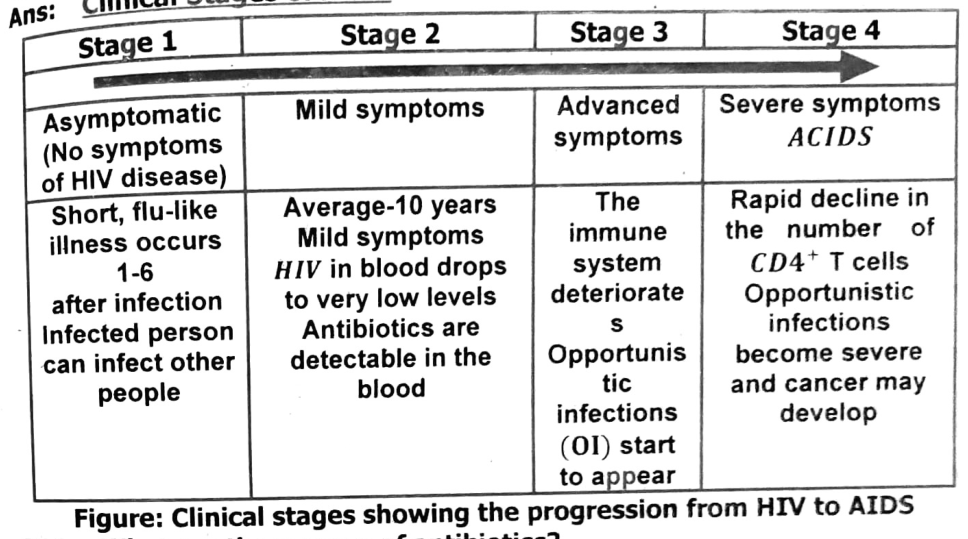
Clinical Stages of AIDS:
| Stage 1 | Stage 2 | Stage 3 | Stage 4 |
|---|---|---|---|
| Asymptomatic (No symptoms of HIV disease) Short, flu-like illness occurs 1-6 after infection Infected person can infect other people | Mild symptoms Average-10 years Mild symptoms HIV in blood drops to very low levels Antibiotics are detectable in the blood | Advanced symptoms The immune system deteriorates Opportunistic infections (OI) start to appear | Severe symptoms AIDS Rapid decline in the number of $CD4^+$ T cells Opportunistic infections become severe and cancer may develop |
Sources of antibiotics:
Antibiotics are derived from various natural sources, including:
- Bacteria:
Many antibiotics are produced by bacteria, e.g., streptomycin, tetracycline and erythromycin. - Fungi:
Fungi like Penicillium (penicillin) and Cephalosporium (cephalosporins) produce antibiotics. - Plants:
Some plants produce antibiotics e.g., garlic. - Animals:
Some animals, like frogs and insects, produce antibiotics as a defense mechanism.
Antibiotics fight bacteria through several key mechanisms:
- Inhibiting Cell Wall Synthesis:
Weakens the bacterial cell wall, causing it to burst.
Example: Penicillin, Cephalosporins - Disrupting Protein Synthesis:
Stops bacteria from making proteins they need to grow.
Example: Tetracyclines, Macrolides - Inhibiting DNA or RNA Synthesis:
Prevents bacteria from replicating their genetic material.
Example: Quinolones, Rifampin - Damaging Cell Membranes:
Breaks the membrane, causing cell contents to leak out.
Example: Polymyxins - Inhibiting Metabolic Pathways:
Blocks essential bacterial enzymes.
Example: Sulfonamides (block folic acid synthesis)
Factors Contributing to Antibiotic Resistance:
- Overuse of Antibiotics:
Taking antibiotics when not needed (e.g., for viral infections like the flu). - Incomplete Courses:
Stopping antibiotics early allows surviving bacteria to become resistant. - Misuse in Agriculture:
Overuse in livestock promotes resistant bacteria that can spread to humans. - Poor Infection Control:
In hospitals or clinics, resistant bacteria can easily spread. - Lack of New Antibiotics:
Few new drugs are being developed, giving resistant bacteria an edge. - Self-medication:
Using antibiotics without a prescription or proper diagnosis.
Prevention of Antibiotic Resistance:
- Use Antibiotics Only When Prescribed:
Follow the doctor’s advice strictly. - Complete the Full Course:
Even if you feel better, finish all doses. - Improve Hygiene and Sanitation:
Reduces the spread of infections and the need for antibiotics. - Avoid Using Antibiotics for Viral Infections:
They don’t work against viruses like colds or flu. - Vaccination:
Prevents diseases, reducing the need for antibiotics. - Regulate Antibiotic Use in Agriculture:
Use only under veterinary guidance. - Educate the Public and Healthcare Workers:
Awareness is key to responsible antibiotic use.
- Disease and illness
- Infectious and non-infectious diseases
- Vector and pathogen
- Acute and chronic diseases
a. Disease vs. Illness:
| Aspect | Disease | Illness |
|---|---|---|
| Definition | A medical condition with identifiable signs and symptoms | The personal experience of feeling unwell |
| Diagnosis | Can be diagnosed medically (e.g., tests) | Based on individual perception |
| Relation | Can exist without symptoms | May occur without a detectable disease |
|---|
b. Infectious vs. Non-infectious Diseases:
| Aspect | Infectious Diseases | Non-infectious Diseases |
|---|---|---|
| Cause | Caused by pathogens (bacteria, viruses, etc.) | Not caused by pathogens (e.g., genetics, lifestyle) |
| Spread | Can spread from person to person | Cannot spread from person to person |
| Examples | Flu, malaria, tuberculosis | Diabetes, cancer, hypertension |
c. Vector vs. Pathogen:
| Aspect | Vector | Pathogen |
|---|---|---|
| Role | Transmits the disease | Causes the disease |
| Harm | Usually not harmed by the pathogen | Harms the host organism |
| Example | Mosquito (transmits malaria) | Plasmodium (causes malaria) |
d. Acute vs. Chronic Diseases:
| Aspect | Acute Diseases | Chronic Diseases |
|---|---|---|
| Duration | Sudden onset, short duration | Develops slowly, lasts a long time |
| Severity | Often severe but brief | May be mild or severe and ongoing |
| Examples | Cold, flu, appendicitis | Diabetes, asthma, arthritis |
Long Questions:
Infectious Diseases:
Definition:
Infectious diseases are caused by pathogens (microorganisms such as bacteria, viruses, fungi, or parasites) and can spread from one person to another, directly or indirectly.
Types of Infectious Diseases:
- Bacterial Diseases:
Caused by bacteria (single-celled organisms).Examples:
- Tuberculosis (by Mycobacterium tuberculosis)
- Typhoid (by Salmonella typhi)
- Viral Diseases:
Caused by viruses (non-living particles that need a host to reproduce).Examples:
- Influenza (Flu)
- Measles
- COVID-19 (by SARS-CoV-2)
- Fungal Diseases:
Caused by fungi (can affect skin or internal organs).Examples:
- Athlete's foot
- Ringworm
- Protozoan Diseases:
Caused by protozoa (microscopic, single-celled organisms).Examples:
- Malaria (by Plasmodium)
- Amoebiasis
- Helminthic Diseases:
Caused by parasitic worms.Examples:
- Ascariasis
- Schistosomiasis
Non-Infectious Diseases:
Definition:
Non-infectious diseases are not caused by pathogens and cannot spread from person to person. They may be genetic, environmental, lifestyle-related, or due to organ malfunction.
Types of Non-Infectious Diseases:
- Genetic/Hereditary Diseases:
Caused by inherited genetic mutations.Examples:
- Hemophilia
- Cystic fibrosis
- Deficiency Diseases:
Caused by lack of essential nutrients.Examples:
- Scurvy (Vitamin C deficiency)
- Rickets (Vitamin D deficiency)
- Chronic Diseases:
Long-lasting diseases often related to lifestyle or age.Examples:
- Diabetes
- Hypertension (High blood pressure)
- Degenerative Diseases
Involve the gradual breakdown of tissues or organs.Examples:
- Alzheimer’s disease
- Osteoarthritis
- Cancer:
Abnormal and uncontrolled growth of cells.Examples:
- Lung cancer
- Breast cancer
- Autoimmune Diseases:
The immune system attacks the body's own tissues.Examples:
- Rheumatoid arthritis
- Lupus
Diabetes:
Diabetes mellitus is a chronic metabolic disease in which the body is unable to properly regulate blood glucose (sugar) levels, either due to lack of insulin or the body's resistance to insulin.
Insulin is a hormone produced by the pancreas that helps glucose enter cells to be used for energy.
Types of Diabetes:
- Type 1 Diabetes (Insulin-Dependent):
- Cause: Autoimmune destruction of insulin-producing beta cells in the pancreas.
- Onset: Usually in childhood or adolescence.
- Insulin production: Completely or almost completely stopped.
- Treatment: Requires lifelong insulin injections.
- Example symptoms: Frequent urination, extreme thirst, weight loss, fatigue.
- Type 2 Diabetes (Non-Insulin-Dependent):
- Cause: Insulin resistance (body cells do not respond to insulin properly) and eventual insulin deficiency.
- Onset: Typically in adults, but increasingly in younger people due to obesity and inactivity.
- Insulin production: Present but not used effectively.
- Treatment: Managed through diet, exercise, oral medication, and sometimes insulin.
- Risk factors: Obesity, poor diet, physical inactivity, genetics.
- Gestational Diabetes:
- Cause: Hormonal changes during pregnancy cause insulin resistance.
- Onset: During pregnancy.
Usually resolves after childbirth, but increases the risk of developing type 2 diabetes later in life.
Effects on baby: High birth weight, premature delivery, risk of type 2 diabetes later.
- Other Specific Types:
Caused by genetic disorders, surgery, medications, infections, or diseases of the pancreas (e.g., MODY – Maturity Onset Diabetes of the Young).
Effects of Diabetes on the Human Body:
Long-term high blood sugar can damage many organs and systems in the body. Here are the major effects:
- Cardiovascular System:
- Increases risk of heart attack, stroke, and high blood pressure.
- Accelerates atherosclerosis (narrowing of blood vessels).
- Nervous System (Neuropathy):
- Causes nerve damage, especially in the feet and hands.
- Leads to numbness, tingling, or pain.
- Eyes (Diabetic Retinopathy):
- Damages blood vessels in the retina.
- Can lead to vision loss or blindness.
- Kidneys (Diabetic Nephropathy):
- Can cause kidney failure, requiring dialysis or transplant.
- Feet and Limbs:
- Poor circulation and nerve damage can lead to foot ulcers or amputations.
- Immune System:
- Weakened immunity increases risk of infections, especially in the skin, urinary tract, and gums.
- Skin Complications:
- Prone to bacterial and fungal infections, itching, and dryness.
Cancer and Its Effects on the Human Body:
Cancer:
Cancer is a disease in which abnormal cells grow uncontrollably and may invade or spread to other parts of the body. It can affect almost any organ or tissue.
How Cancer Develops:
- Cell Mutation:
Damage to the DNA causes cells to divide uncontrollably. - Tumor Formation:
These cells may form a mass called a tumor (except in blood cancers like leukemia). - Invasion and Spread (Metastasis):
Cancer cells can enter the blood or lymph system and spread to other organs.
Effects of Cancer on the Human Body:
| Body System/Effect | Impact |
|---|---|
| Immune System | Weakened response, increased risk of infections. |
| Organ Damage | Cancer can destroy normal tissue and disrupt organ function (e.g., lungs, liver). |
| Weight Loss & Fatigue | Due to high energy use by cancer cells and poor nutrient absorption. |
| Pain | Caused by tumor pressure on nerves or organs. |
| Blood Disorders | In cancers like leukemia, normal blood cell production is reduced. |
| Hormonal Imbalance | Some cancers produce hormones that disrupt body functions. |
|---|---|
| Mental Health Effects | Anxiety, depression, and stress due to illness and treatment. |
COVID – 19 and It’s Harmful Effects on the Human Body:
COVID – 19:
COVID – 19 is a respiratory illness caused by the SARS-CoV-2 virus, first identified in late 2019. It spreads mainly through respiratory droplets when an infected person coughs, sneezes, or talks.
Harmful Effects of COVID-19 on Human Body:
- Respiratory System (Lungs):
- Primary target of the virus.
- Causes inflammation and fluid buildup in the lungs.
- Can lead to pneumonia, acute respiratory distress syndrome (ARDS), or respiratory failure.
- Circulatory System (Heart & Blood):
- Increases risk of blood clots and stroke.
- May cause heart inflammation (myocarditis) or arrhythmias.
- Immune System:
- In some people, it triggers a cytokine storm—an overreaction of the immune system that damages body tissues.
- Nervous System (Brain & Nerves):
- Can cause loss of taste and smell, headaches, confusion, and in severe cases, seizures or stroke.
- Digestive System:
- Some experience nausea, vomiting, diarrhea, or abdominal pain.
- Long-term Effects (Long COVID):
- Fatigue, brain fog, joint pain, and breathing difficulties lasting weeks or months after recovery.
HIV (Human Immunodeficiency Virus) attacks the immune system, specifically helper T cells (CD4 T cells). It weakens the body’s ability to fight infections. Without treatment, HIV can lead to AIDS (Acquired Immune Deficiency Syndrome) which is a chronic disease. The symptoms of AIDS include fever, headache, muscle aches, joint pain, swollen lymph nodes, diarrhoea, weight loss and severe immune dysfunction. In the final stages due to immune dysfunction lots of opportunistic infections attack the patient.
How HIV Affects the Immune System?
HIV is transmitted through patient’s blood and body fluids. Infected needles, blood and instruments are mainly responsible for the spread of this disease.
Progression to AIDS:
Without treatment, HIV progresses through stages:
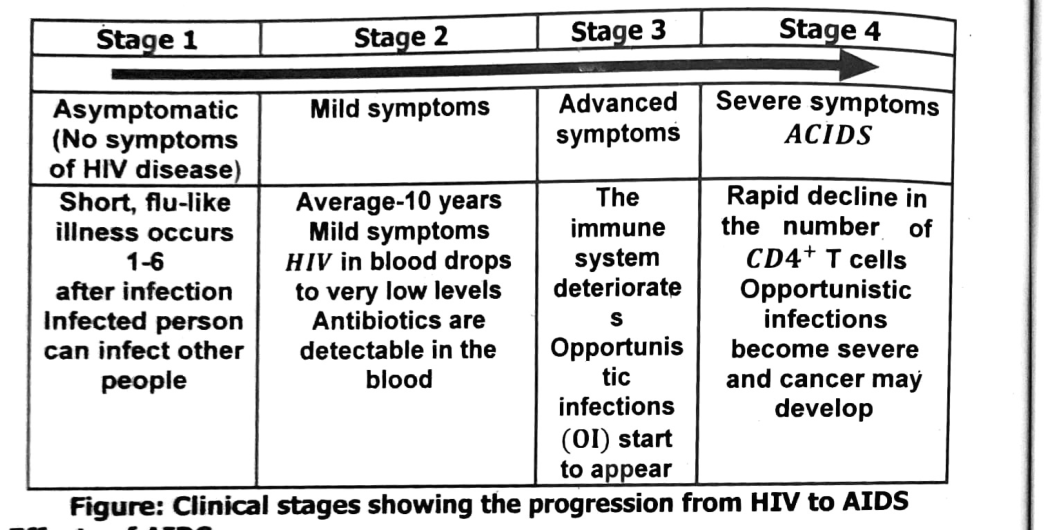
After infection there are four clinical stages showing the progression from HIV to AIDS. Stage 1 is without any symptoms and it lasts for few weeks. Stage 2 has mild symptoms and it can last up to 10 years. In stage 3 the immune system weakens and opportunistic infections start to appear.
| Stage 1 | Stage 2 | Stage 3 | Stage 4 |
|---|---|---|---|
| Asymptomatic (No symptoms of HIV disease) Short, flu-like illness occurs 1-6 after infection Infected person can infect other people | Mild symptoms Average-10 years Mild symptoms HIV in blood drops to very low levels Antibiotics are detectable in the blood | Advanced symptoms The immune system deteriorates Opportunistic infections (OI) start to appear | Severe symptoms AIDS Rapid decline in the number of CD4+ T cells Opportunistic infections become severe and cancer may develop |
Figure: Clinical stages showing the progression from HIV to AIDS
Effects of AIDS:
AIDS causes the body to lose its defense, allowing diseases like pneumonia or cancer to attack. In Pakistan, drug-resistant TB is a common problem for AIDS patients. This increases suffering and healthcare costs.
Plant diseases in Pakistan:
Pakistan is an agricultural country. Crops and their yields are the back bone of our economy. Some common plant diseases caused by fungi in Pakistan are following.
- Rust:
Wheat leaf rust is a fungal disease caused by Puccinia rust fungus, it infects plants such as wheat, barley, rye. It gets transmitted from one plant to another through spores or air. Rust infections can lead up to 20% yield loss. - Smut:
Smut is also a fungus that affects wheat crops and some grasses. Smut gets its name from the sooty, black appearance of infected wheat plants. The fungus produces spores in the leaves, grains or ears. These fungi are damaging pathogens of cereal crops, reducing yield and quality of harvested grain. It is caused by fungi Ustilago tritici. - Red rot of Sugarcane:
Red rot is a very serious disease of sugarcane. The main symptom of the disease is the reddening of the internal tissues and reduced sugar content. It is caused by fungi Colletotrichum falcatum.
Effective disease management includes resistant varieties, crop rotation, and fungicides, along with proper diagnosis and monitoring.
Discovery of First Antibiotic / Discovery of Penicillin:
The discovery of penicillin is attributed to Alexander Fleming in 1928. He was studying bacteria in his lab. He left a dish with bacteria uncovered. When he returned to his laboratory after a holiday, he noticed a mold, Penicillium notatum, growing on that bacterial culture. To his surprise, the mold killed the bacteria around it. He realized the mold was producing a special substance that could kill a wide range of harmful bacteria. He isolated the substance and named it penicillin. Fleming thought penicillin could be used to treat bacterial infections, but he needed help to develop it. He worked with two other scientists, Florey and Chain, to purify and mass-produce penicillin.
Finally, penicillin was ready to use, and it revolutionized the treatment of bacterial infections. It saved many lives and became a widely used medicine. In short, Fleming’s discovery of penicillin was an accident that led to a breakthrough in medicine; it has been estimated that Penicillin has saved over 500 million lives.
Penicillin was the first successful antibiotic used in medicine. From 1940s to 1960s it was widely used throughout the world against bacterial infections. But afterwards many bacteria got resistant against penicillin. Penicillin is still used to treat some bacterial infections.
Antibiotics:
Antibiotics are medicines that fight bacterial infections by killing bacteria or stopping their growth. They are essential in healthcare but must be used carefully.
Antibiotics, like penicillin discovered in 1928 by Alexander Fleming, treat infections such as typhoid or pneumonia. They do not work against viruses, like the flu or COVID-19.
Types of Antibiotics:
- Bactericidal: Kill bacteria (e.g., penicillin).
- Bacteriostatic: Stop bacteria from growing (e.g., tetracycline).
Some target specific bacteria (narrow-spectrum, e.g., penicillin), while others work on many types (broad-spectrum, e.g., amoxicillin).
How They Work:
Antibiotics attack bacteria in different ways:
- Break their cell walls (e.g., penicillin).
- Block protein production needed for growth (e.g., tetracycline).
- Stop DNA copying, killing bacteria (e.g., ciprofloxacin).
Uses in Pakistan:
Antibiotics save lives by treating infections. In 2024, doctors in Karachi used antibiotics to treat over 15,000 typhoid cases. They are also used in surgeries to prevent infections and in farming to keep animals healthy.
Antibiotic Resistance:
Overusing antibiotics leads to resistance, where bacteria survive treatment. In Pakistan, drug-resistant typhoid increased by 12% in 2024.
Bacteria resist by:
- Making enzymes to destroy antibiotics.
- Changing their structure to avoid attack.
- Pushing antibiotics out of their cells.
This makes infections harder to treat, increases deaths, and raises costs.
Prevention of Resistance:
To fight resistance:
- Use antibiotics only when prescribed.
- Finish the full course of treatment.
- Avoid using antibiotics in animal feed unnecessarily.
- Develop new antibiotics through research.
- Keep hospitals clean to stop infections.
Antibiotic Resistance:
Antibiotics are essential in medicine, but their overuse and misuse have contributed to antibiotic resistance. Antibiotic resistance in bacteria refers to the ability of bacteria to survive and grow in the presence of antibiotics, which are designed to kill or inhibit their growth. This occurs when bacteria develop mechanisms to avoid the effects of antibiotics, making these life-saving drugs less effective. It leads to untreatable infections that result in increased mortality.
Resistant infections require longer treatment, increasing healthcare costs and make certain medical procedures risky. For example, drug resistant typhoid, drug resistant TB etc.
Antibiotics are essential in medicine, but their overuse and misuse have contributed to antibiotic resistance. Antibiotic resistance in bacteria refers to the ability of bacteria to survive and grow in the presence of antibiotics, which are designed to kill or inhibit their growth. This occurs when bacteria develop mechanisms to avoid the effects of antibiotics, making these life-saving drugs less effective. It leads to untreatable infections that result in increased mortality.
Resistant infections require longer treatment, increasing healthcare costs and make certain medical procedures risky. For example, drug resistant typhoid, drug resistant TB etc. The development of resistance in bacteria is a natural process that occurs through various genetic mechanisms.
Mechanisms of resistance:
Antibiotic resistant bacteria utilize following mechanisms:
- Enzyme production: Bacteria produce enzymes that degrade antibiotics.
- Altered target site: Bacteria modify their target sites, making antibiotics less effective.
- Active outflow: Bacteria pump antibiotics out of their cells.
- Biofilm formation: Bacteria form protective biofilms, reducing antibiotic effectiveness.
Factors contributing to resistance:
There are many factors which are responsible for increasing antibiotics resistance in pathogenic bacteria. These include excessive use of antibiotics for humans, agricultural use in animal feed and lack of new antibiotic development.