
Significance of Leisure Activities in Pakistani Society:
- Mental Relaxation: Leisure activities provide a break from daily work and studies, helping people relax and reduce stress.
- Physical Fitness: Activities such as sports, walking, hiking, and swimming help maintain physical fitness and overall health.
- Social Interaction: Leisure activities bring people together and help develop friendships, cooperation, and stronger community relationships.
- Cultural Preservation: Traditional activities, festivals, music, and games help preserve Pakistani culture and heritage.
- Family Bonding: Activities such as family picnics, outings, and social gatherings provide opportunities for families to spend quality time together.
- Personal Development: Leisure activities can develop creativity, confidence, teamwork, discipline, and communication skills.
- Community Unity: Community events and recreational activities encourage people from different backgrounds to interact and develop a sense of belonging and unity.
Popular Leisure Activities in Pakistan
- Cricket and Other Sports: Cricket, football, hockey, badminton, and volleyball are popular recreational activities.
- Traditional Games: Traditional games such as kabaddi, malakhra, pithu garam, and kokla chapaki are enjoyed in many communities.
- Cultural Festivals: People participate in regional festivals, fairs, cultural shows, and traditional celebrations.
- Family Picnics and Outings: Families commonly enjoy parks, recreational areas, hiking spots, and picnics.
- Music and Entertainment: Listening to music, watching films, qawwali, and attending cultural performances are popular forms of entertainment.
- Reading and Creative Activities: Reading books, painting, crafts, photography, and other creative hobbies are also enjoyed during free time.
Varied Definitions of Rule of Law:
The rule of law as a set of principles ensuring that the government treats all individuals equally and fairly, regardless of differences in race, gender, education, or economic status. This includes accountability to pre-existing laws, equal treatment before the law, protection of human rights, access to efficient dispute resolution, and maintenance of law and order.
The United Nations Secretary-General defined the rule of law as a governance principle where all public and private entities are accountable to publicly promulgated, equally enforced, and independently adjudicated laws consistent with international human rights standards. This encompasses legal supremacy, equality, accountability, fairness, separation of powers, participation in decision-making, legal certainty, avoidance of arbitrariness, and transparency.
Categories of Rule of Law:
Definitions of the rule of law fall into two broad categories:
- Functional Focus: Emphasizes the rule of law’s role in ensuring law and order, and predictable, efficient judgments by courts and tribunals.
- Institutional Focus: Highlights the need for comprehensive laws, well-functioning courts, and well-trained law enforcement agencies.
Both categories view the rule of law as comprising different socially constructed culminations leading to predictable and efficient rulings.
The 2030 Agenda for Sustainable Development envisions a world where all people live free of violence and fear, where hunger and poverty are eliminated, and the planet is protected for future generations. Pakistan is also signatory to the UN 2030 Agenda for Sustainable Development Goals (SDG).
This global transformation is predicated on the understanding that human rights, peace and security, and development are deeply interlinked and mutually reinforcing. The SDG-16 aims to create a peaceful, just and inclusive societies that live under the rule of law.
This is the necessary condition in which all other goals — including those related to health, education, economic activity, and other aspects of development — can be achieved. As such, this global aspiration ushers in a new kind of development, in which people make and influence the decisions that affect their lives.
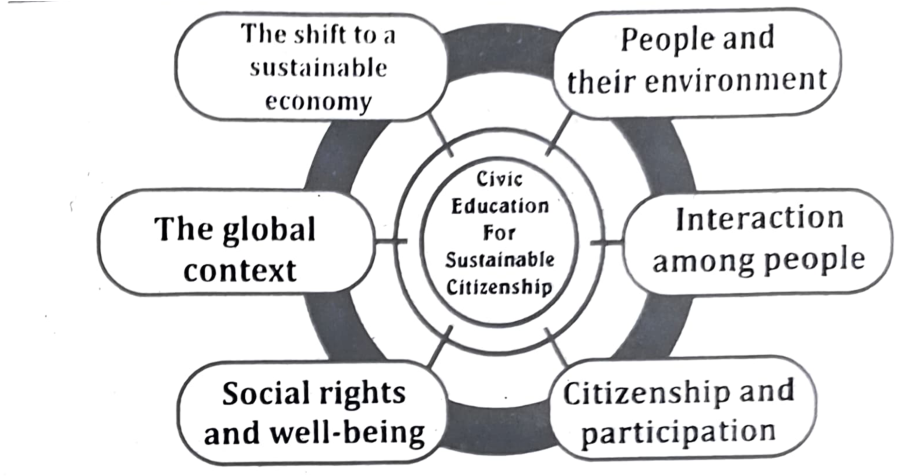
Rule of law means that everyone, including the government, must follow the law. It ensures laws are applied equally and fairly.
Importance in a democracy:
- Protects individual rights
- Limits government power
- Ensures fairness and justice
- Holds leaders accountable
- Maintains order and stability
Citizenship:
Citizenship is the legal status of being a member of a country, with specific rights, duties, and responsibilities.
Importance:
- Grants rights like voting, protection, and access to services
- Requires duties like obeying laws and paying taxes
- Encourages participation in democratic processes
- Strengthens national identity and unity
Citizen and Citizenship:
- Citizen:
A citizen is a legally recognized member of a country who enjoys certain rights and protections and has responsibilities toward the state.
- Citizenship:
Citizenship is the legal status of being a member of a particular country. It establishes a relationship between an individual and the state, giving the person certain rights, privileges, and responsibilities.
- Rights of a Citizen:
Citizens may have rights such as:
- Right to vote
- Right to education
- Right to freedom of expression
- Right to equality before law
- Right to protection by the state
- Responsibilities of a Citizen
Citizens are expected to:
- Obey the law
- Respect the rights of others
- Protect public property
- Participate positively in society
- Show loyalty to the country
The Rights and Responsibilities of Citizenship:
Citizenship confers certain rights, privileges, and responsibilities upon individuals within the jurisdiction of the country to which they belong. These rights and responsibilities may vary depending on the laws and regulations of the specific nation. Here we discuss different types of citizenship rights:
Rights of Citizen:
- Legal Rights: Citizens have legal protections granted by the constitution. This includes the right to a fair trial, freedom of speech, religion, and peaceful gatherings and congregations.
- Social Benefits: Citizens may be entitled to various social benefits provided by the government, such as access to healthcare, education, social security, and welfare programs. These act as support systems for citizens.
- Political Participation: Citizenship often entails the right to participate in the political process, such as voting in elections, running for public office, and engaging in political activism including protests to express their views.
- Economic Rights: The Constitution of Pakistan grants its citizens several economic rights, including the right to own property, protection from compulsory acquisition, and freedom to engage in any trade or profession. It also mandates the state to provide basic necessities like food, housing, education, and healthcare, ensure equitable wealth distribution, and promote social and economic justice for all.
Responsibilities:
Alongside rights, citizenship also entails certain responsibilities, such as:
- Rule of Law: Obeying the laws of the country is considered the responsibility of the citizens. This ensures a fair and orderly society for all.
- Paying Taxes: Taxes contribute to funding public services like roads and schools that everyone uses. Paying taxes is a key responsibility of citizenship.
- Jury Duty: In some cases, citizens may be called upon to serve on juries and help decide court cases. It's a significant responsibility, but also a way to participate in the justice system.
- Compulsory Conscription: Certain countries require citizens to serve in the military during times of need. This helps ensure the country's safety and security.
The Role of Tax Revenue in Funding Public Services:
- Improvement of Tax Revenue
- Progress
- Tax Efficiency and Economic Growth
- Tax Evasion and Avoidance
- Alternative Sources of Revenue

Rights of citizen:
- Legal Rights: Citizens have legal protections granted by the constitution. This includes the right to a fair trial, freedom of speech, religion, and peaceful gatherings and congregations.
- Social Benefits: Citizens may be entitled to various social benefits provided by the government, such as access to healthcare, education, social security, and welfare programs. These act as support systems for citizens.
- Political Participation: Citizenship often entails the right to participate in the political process, such as voting in elections, running for public office, and engaging in political activism including protests to express their views.
Responsibilities of citizen:
- Paying Taxes: Taxes contribute to funding public services like roads and schools that everyone uses. Paying taxes is a key responsibility of citizenship.
- Jury Duty: In some cases, citizens may be called upon to serve on juries and help decide court cases. It's a significant responsibility, but also a way to participate in the justice system.
- Compulsory Conscription: Certain countries require citizens to serve in the military during times of need. This helps ensure the country's safety and security.
Impact of Citizenship on National Identity and Democracy:
- National Identity:
Citizenship gives individuals a sense of belonging to the nation and connects them with its culture, history, and values.
- Sense of Belonging:
Citizenship helps people understand their role and place in society and encourages them to contribute positively to their country.
- Cultural Participation:
Citizens participate in cultural, social, and national activities, helping to strengthen a shared national identity.
- Democratic Participation:
Citizenship is essential for democracy because it allows people to participate in the political and decision-making processes of the country.
- Protection of Rights:
The rights of citizens are protected by the Constitution and laws. These include equality, freedom, dignity, and protection from unlawful actions.
- Right to Vote:
Citizens can participate in elections and choose their representatives, making government accountable to the people.
- Political Expression:
Citizens have opportunities to express their opinions and concerns through lawful democratic activities.
- Duties and Responsibilities:
Citizens are expected to obey laws, respect others' rights, pay taxes, protect public property, and contribute to society.
- Democracy in Pakistan:
In Pakistan, democratic institutions have provided opportunities for political participation and representation. However, challenges such as political instability, corruption, and governance problems have sometimes affected democratic development.
Duties and Responsibilities of a Citizens:
| Duties of Citizens | Rights and Responsibilities of Citizens |
|---|---|
An action that is required by law
| An action that benefits the community / people
|
Duties of citizens to the common good:
| Duties of Citizens | How the Duties Relate to the Common Good |
|---|---|
| Obeying the laws | Obeying laws keeps order so that people are safe. |
| Paying taxes | Taxes pay for large programs that benefit everyone (roads, schools, and libraries, among others). |
| Jury duty | By participating in jury duty, one is protecting the Constitutional right to be tried by one's peers. |
| Defending the nation | Defending the nation benefits the entire country and protects the nation. |
| Responsibilities of a Citizen | How the Responsibilities Relate to the common Good |
|---|---|
| Voting | Voting relates to the common good because voting is one way for citizen views to be heard by representatives of the people. |
| Attending civic meetings | By attending civic meetings one can have one's voice heard by public officials. |
| Petitioning the government | Petitioning the government allows one to voice one's opinion to the government. |
| Community service | Community service helps the common good. It benefits everyone when a citizen sees a need in their community and takes an extra step to find the solution. |
Citizen Participation in Community Services and Volunteer Work:
- Meaning of Citizen Participation:
Citizen participation means the active involvement of people in activities that improve their community and society.
- Community Service:
Community service includes activities performed to benefit others, such as cleaning public places, helping needy people, planting trees, and supporting educational programs.
- Volunteer Work:
Volunteer work is the willing and unpaid contribution of time, skills, or effort to help individuals, organizations, or communities.
- Promotes Social Unity:
Community service brings people together and develops cooperation, friendship, and mutual understanding.
- Helps People in Need:
Volunteers can support poor families, elderly people, children, and people affected by emergencies or disasters.
- Develops Skills:
Volunteer activities help individuals develop leadership, teamwork, communication, organization, and problem-solving skills.
- Improves the Community:
Citizens can contribute to a cleaner, safer, and healthier community through activities such as tree plantation, cleanliness campaigns, and awareness programs.
- Builds Responsibility:
Participation encourages citizens to understand their duties and responsibilities and become more responsible members of society.
- Strengthens Democracy:
Active citizens contribute ideas, identify community problems, and work collectively to find solutions. This strengthens civic responsibility and democratic participation.
Importance of Voluntary Work and Community Service:
Voluntary work is intended to help people in a particular area. Volunteering is unpaid work that benefits the community. It's freely chosen, meaning people do it because they want to help, not because they have to. This is different from regular jobs. It has three characteristics:
- Voluntariness:
The activity is free, autonomous, and independent.
- Non-profit status:
Volunteer work constitutes a not-for-profit system that adds value to society.
- Meaningful activity:
Voluntary work is a meaningful activity that emphasizes the contribution to the common good. Volunteers can develop expertise for their work.
Participation in community service and volunteering is essential for building a healthier, more resilient, and compassionate Pakistan. Examples of community service platforms include
Note For Teachers: Whole Class Discussion:
Discussion Topic:
Reflect on your experience of voluntary community work. Discuss the type of work you did, why you chose it, and what impact it had on you and the community.
Alkhidmat Foundation Pakistan, Edhi Foundation (founded by Abdul Sattar Edhi), Shaukat Khanum Memorial Cancer Hospital, Aga Khan Foundation, and Baithak School Network set up by a non-profit organization, Society for Educational Welfare (SEW), in 1996.
There are several advantages to volunteering and community services:
- Connecting with Others:
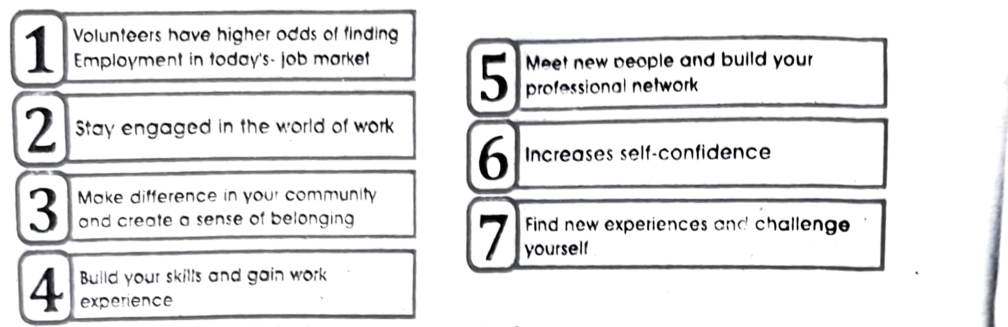
Volunteering is an excellent way to meet new people and strengthen existing relationships through shared activities. It helps develop social skills by regularly interacting with a group, making it easier to branch out and make more connections. Engaging in community service as a family can teach children the value of helping others and create shared experiences.
- Improving Mental and Physical Health:
Volunteering boosts self-esteem and life satisfaction by providing a sense of accomplishment and pride. Regular interaction with others through volunteering can reduce social isolation, a key risk factor for depression. It can also improve physical health, especially in older adults, by reducing symptoms of chronic pain or heart disease.
- Career Advancement:
Volunteering provides experience in new fields, helping to explore potential career paths without long-term commitment. It offers opportunities to practice and improve skills such as teamwork, communication, problem-solving, and task management. Additionally, volunteering can lead to connections with professional organizations and internships.
- Personal Fulfillment:
Volunteering allows exploration of interests and passions, providing a break from daily routines. Engaging in meaningful activities can renew motivation and creativity, benefiting both personal and professional life. Overall, community service enhances connection with the community, boosts mental and physical health, advances careers, and brings joy and fulfillment to people's lives. It's a powerful way to make a difference while enriching personal experience.
Traits of a Citizen:
Sociologists view good citizens as well-rounded individuals who actively make their communities better. They do this by volunteering their time, speaking up for what is good for society, and even getting involved in local government. This shows a strong sense of civic responsibility. Respect for diversity is another key trait. Good citizens appreciate the different backgrounds and cultures that make up their community. They promote inclusivity, which means making everyone feel welcome and respected, and they challenge unfair prejudices.
In democracy, active citizens make their voices heard by voting, staying informed about current events, and expressing their opinions on issues that affect their community. The active and effective citizens participate thoughtfully in civic life and exhibit following traits:
- Protecting the Environment:
Encouraging taking care of surroundings and understanding the impact of actions on the planet.
- Helping Neighbours and Fellow Community Members:
Teaching the value of kindness and support within the community.
- Being Responsible for One's Own Actions: Instilling accountability and the importance of owning up to mistakes.
- Being Empathetic: Promoting understanding and compassion towards others' feelings and situations.
- Respecting Other People's Space, Rights, and Property: Emphasizing the importance of boundaries and the rights of others.
- Abiding by the Law: Highlighting the necessity of following rules and regulations for a harmonious society.
- Being an Active Member of Society: Encouraging participation in community and civic activities.
- Being Aware of One's Surroundings: Teaching mindfulness and awareness of the local and global environment.
- Standing Up for Right and Standing Against Wrong: Instilling a sense of justice and the courage to speak out against injustices.
- Honesty: Promoting truthfulness and integrity in all actions.
By incorporating these traits into education, a strong ethical foundation is developed, guiding behaviour and interactions, and fostering a generation of responsible and conscientious citizens.
How Could Volunteering Help You?
Traits and Responsibilities of a Responsible Pakistani Citizen:
A. Traits of a Responsible Citizen:
- Loyalty to the Country:
A responsible citizen shows loyalty, honesty, and commitment to Pakistan and works for its progress.
- Honesty and Integrity:
Citizens should be truthful, fair, and trustworthy in their personal and social dealings.
- Respect for Others:
They should respect the rights, beliefs, dignity, and opinions of others.
- Tolerance:
A responsible citizen practices tolerance and peaceful coexistence with people from different backgrounds.
- Kindness and Cooperation:
Helping people in need and cooperating with others promotes social harmony and unity.
- Courage and Responsibility:
Responsible citizens accept responsibility for their actions and contribute positively to society.
B. Responsibilities of a Pakistani Citizen:
- Obey the Law:
Citizens must follow the Constitution, laws, and regulations of Pakistan.
- Loyalty and Allegiance:
According to Article 5 of the Constitution of Pakistan, loyalty to the State is the basic duty of every citizen.
- Respect National Values:
Citizens should respect Pakistan’s religious, cultural, and social values.
- Protect the Environment:
They should keep their surroundings clean, avoid pollution, and participate in environmental protection activities.
- Help Others:
Citizens should assist poor, elderly, and needy people whenever possible.
- Promote Social Harmony:
They should avoid unnecessary conflicts and promote peace, tolerance, and unity.
- Contribute to National Development:
Responsible citizens should work honestly and contribute to the economic, social, and educational development of the country.
- Respect Elders:
Showing respect and care toward elders and other members of society is an important social responsibility.
Modes of Acquiring Citizenship:
- By Birth:
A person may acquire citizenship by being born to citizens of a country, subject to its citizenship laws.
- By Descent:
Citizenship may be acquired through parents or ancestors who are citizens of a country.
- By Naturalization:
A foreign national may acquire citizenship after fulfilling the legal requirements of the country, such as residence and good character.
- By Immigration:
Immigration means moving to another country to live there. Immigration itself does not automatically grant citizenship, but an immigrant may become eligible for citizenship after meeting the country's legal requirements.
- By Marriage:
In some countries, a foreign spouse may acquire citizenship through marriage, subject to specific legal conditions and procedures.
Modes of Losing Citizenship:
- Renunciation:
A person may voluntarily give up citizenship according to the law of the country.
- Acquisition of Another Citizenship:
In some countries, obtaining foreign citizenship may result in the loss of the original citizenship, depending on dual-citizenship laws.
- Deprivation:
Citizenship may be withdrawn by the state in certain legally defined circumstances, such as fraud in obtaining citizenship.
- Emigration:
Emigration means leaving one's country to live abroad. Emigration alone does not normally cause loss of citizenship; citizenship is lost only if the law provides for it or the person formally gives it up.
According to the Pakistan Citizenship Act, 1951, a person may lose Pakistani citizenship on the following legal grounds:
- Voluntary Acquisition of Foreign Citizenship:
If a Pakistani citizen voluntarily acquires the citizenship of another country, they may lose their Pakistani citizenship (except where dual nationality is allowed by Pakistan with specific countries).
- Disloyalty or Treason:
A person can be deprived of citizenship if found engaging in acts of disloyalty to Pakistan or working against the interests of the state, such as aiding enemies during wartime.
- Fraud in Citizenship Process:
If a person obtained citizenship through false information or concealment of facts, their citizenship can be revoked upon discovery.
Losing Citizenship:
Renunciation:
People can voluntarily give up their citizenship through a formal process. This usually involves submitting a document to the government. For example, a U.S. citizen who wants to renounce their citizenship must complete a specific form and appear before a U.S. official abroad.
Revocation Due to Criminal Activity:
Some countries can take away citizenship from people convicted of serious crimes or acts that threaten national security. This typically involves legal proceedings and depends on the country's laws. For example, someone who commits terrorism may lose their citizenship in certain countries.
Discretionary Loss by Authorities:
In some cases, authorities may have the power to revoke citizenship if they believe it was obtained through fraud, misrepresentation or by twisting the facts. This might happen if someone provided false information during the application process. The authorities would then take legal action to revoke citizenship.
Automatic Loss through Dual Citizenship Restrictions:
Some countries don't allow dual citizenship, meaning you can only be a citizen of one country at a time. If you acquire citizenship in a country that doesn't allow dual citizenship and don't renounce your original citizenship, you may automatically lose your citizenship in the first country. For example, a Japanese citizen who becomes a citizen of a country that doesn't allow dual citizenship may automatically lose their Japanese citizenship.
Differentiate between immigration and emigration:
| Aspect | Immigration | Emigration |
|---|---|---|
| Definition | Entering a new country to live | Leaving one's country to live elsewhere |
| Focus | Destination country | Origin country |
| Direction | Coming into a country | Going out of a country |
| Example Sentence | "She immigrated to Canada in 2020." | "She emigrated from India in 2020." |
| Point of View | From the receiving country | From the leaving country |
Checks & Balances by the Citizens & Parliament:
The government of Pakistan, like any other country, is responsible for making important decisions such as making laws, managing public resources, and representing the nation internationally. This power allows the government to build roads, fund schools, and ensure public safety. To ensure the fair use of this power, citizens and parliament must play their roles. Citizens are represented by the government, and parliament consists of elected officials working on their behalf. Together, they hold the government accountable.
Citizen Participation:
In Pakistan, citizens can make their voices heard and hold the government accountable in several ways:
- Voting in Elections:
According to the Election Act 2017, citizens express their approval or disapproval of the government’s actions and decisions by voting in elections. This allows them to choose leaders who reflect their views.
- Public Discourse and Advocacy:
Under Article 19 of the Constitution of Pakistan, citizens have the right to freedom of speech and expression. They can engage in public discourse, raise awareness about issues, and advocate for change through letters, town hall meetings, and social media.
- Participation in Oversight Mechanisms:
Citizens can participate in oversight mechanisms like public hearings, investigations, and audits to ensure government transparency and accountability. They can submit complaints to the Federal Ombudsman as per the Ombudsman Institutional Reforms Act 2013 regarding government services or conduct.
Parliamentary Oversight:
The parliament of Pakistan serves as a crucial check on government power. Parliamentarians, the elected officials, act as representatives of the people. According to Article 66 of the Constitution of Pakistan, they can question government officials, investigate government programs, and debate proposed laws. This holds the government accountable for its decisions and performance. Additionally, under Article 160, parliament reviews the government’s budget to ensure wise spending. Other relevant articles include:
- Article 50: Establishes the composition of the Parliament, including the Senate and the National Assembly, ensuring representation from across the nation.
- Article 73: Details the legislative process for money bills, including budget approvals.
- Article 89: Provides for the power of the President to promulgate Ordinances when Parliament is not in session, subject to later approval by Parliament.
- Article 95: Governs the procedure for a vote of no confidence against the Prime Minister, enabling parliament to hold the executive accountable.
Working as a Team:
In Pakistan, citizens and parliament work together to create a system of checks and balances on government power. This system helps ensure that the government remains transparent, responsive, and accountable to the people it serves. By actively participating in the democratic process, citizens play a vital role in shaping the country’s future.
Citizen Accountability:
Citizen accountability in Pakistan includes:
- Voting in Elections:
According to the Election Act 2017 and Article 222 of the Constitution of Pakistan, citizens hold the government accountable through periodic elections. By voting in local, provincial, and national elections, citizens express their approval or disapproval of the government’s actions and decisions, influencing the composition and direction of governance.
- Public Discourse and Advocacy:
Under Article 19 of the Constitution of Pakistan, citizens have the right to freedom of speech and expression. They engage in public discourse, raise awareness about issues, and advocate for change through letters, town hall meetings, and social media. This enables them to influence public opinion and demand accountability from elected representatives.
- Participation in Oversight Mechanisms:
Citizens participate in oversight mechanisms such as public hearings, investigations, and audits as outlined by various laws and regulations. Parliamentary committees under Article 66 of the Constitution scrutinize government actions and expenditures, ensuring transparency and accountability. Citizens can also lodge complaints with the Federal Ombudsman as per the Ombudsman Institutional Reforms Act 2013, leading to investigations and corrective actions.
Losing citizenship can deeply affect an individual’s identity and sense of belonging by:
- Causing a loss of national identity:
People often tie their sense of self to their country; losing citizenship can lead to confusion or loss of identity.
- Creating a feeling of exclusion:
Without legal recognition, individuals may feel disconnected or rejected by the society they once belonged to.
- Reducing access to rights and services:
Loss of legal status can make it harder to live, work, or access healthcare and education, increasing feelings of insecurity.
- Affecting emotional well-being:
The loss can lead to anxiety, depression, or a sense of being stateless or rootless.
Role of Parliament in Pakistan:
The parliament of Pakistan, as defined by Article 50 of the Constitution, serves as a key institution for holding the government accountable. Parliamentarians, elected through democratic processes, act as representatives of the people and they have to play their constructive roles in governance. The Parliament scrutinizes public spending and exercises control of expenditure incurred by the government through the work of the relevant Standing Committees. The Public Accounts Committee has a special role in reviewing the report of the Auditor General.
The functioning of Parliament includes the following features:
- Question Time:
Parliamentarians, under parliamentary conventions and rules, regularly question government officials during sessions. This mechanism, akin to practices in the UK’s House of Commons, allows parliamentarians to hold the government accountable for its policies, actions, and performance.
- Committee Oversight:
Parliamentary committees, mandated by Article 73 and other relevant provisions, conduct inquiries and investigations into government policies, programs, and expenditures. They gather evidence through hearings and public consultations, ensuring that government actions align with public interests and legislative mandates.
- Budget Scrutiny:
According to Article 160, parliament reviews and approves government budgets, ensuring fiscal responsibility and effective allocation of public funds. Through budget debates and oversight mechanisms, parliament holds the government accountable for its financial decisions and priorities.
Importance of Free Press, Justice and Equality for a Prosperous Country:
- Free Press:
A free press allows journalists and citizens to share information, opinions, and public concerns without unfair interference.
- Promotes freedom of expression.
- Keeps the public informed about important issues.
- Helps hold governments and institutions accountable.
- Exposes corruption and social problems.
- Encourages informed public participation.
- Justice:
Justice means treating people fairly and ensuring that everyone is protected by the law.
- Ensures equality before the law.
- Protects the rights and dignity of citizens.
- Prevents discrimination and unfair treatment.
- Builds trust in institutions.
- Creates peace and stability in society.
- Equality:
Equality means providing people with equal rights, opportunities, and protection regardless of their background.
- Promotes social harmony and unity.
- Provides equal opportunities in education and employment.
- Reduces discrimination and social divisions.
- Encourages people to contribute to national development.
- Supports a fair and inclusive society.
Constitutional Protections and Frameworks of a Free Press:
- Meaning of Free Press:
A free press means that newspapers, television, radio, websites, and other media can report news, express opinions, and discuss public issues without unjustified government interference.
- Article 19 – Freedom of Speech and Press:
Article 19 of the Constitution of Pakistan 1973 guarantees every citizen the right to freedom of speech and expression and provides for freedom of the press.
However, this freedom is subject to reasonable restrictions imposed by law in matters such as:
- Glory of Islam
- Integrity, security, or defence of Pakistan
- Friendly relations with foreign states
- Public order
- Decency or morality
- Contempt of court
- Incitement to an offence
- Article 19A – Right to Information:
Article 19A provides citizens with the right to have access to information in matters of public importance, subject to regulations and reasonable restrictions prescribed by law.
It strengthens transparency and enables citizens to obtain information about government institutions and public affairs.
- Importance of Article 19A:
Article 19A helps:
- Promote transparency and accountability.
- Reduce the possibility of misuse of public authority.
- Enable citizens to make informed decisions.
- Strengthen democratic participation.
- Support the role of the media in informing the public.
- Role of the Judiciary:
The Supreme Court of Pakistan has recognized that the right of citizens to receive information is connected with freedom of expression under Article 19. Later, Article 19A gave the right to information explicit constitutional recognition.
To implement Article 19A, legislation has been introduced at the federal and provincial levels. For example, Khyber Pakhtunkhwa and Punjab enacted Right-to-Information laws in 2013.
Print Media Laws and Importance of Free Press in Pakistan:
A. Print Media Laws in Pakistan:
Print media laws regulate the working conditions, professional standards, ethics, and responsibilities of newspapers and journalists.
- Newspaper Employees (Conditions of Service) Act, 1973:
This law deals with the working conditions and service matters of newspaper employees, including journalists. Better working conditions help journalists perform their professional duties effectively and contribute to informing the public.
- Press Council Ordinance, 2002:
The Press Council Ordinance 2002 established the Press Council of Pakistan. Its major objectives include:
- Promoting professional and ethical standards in journalism.
- Implementing the Ethical Code of Practice for newspapers and news agencies.
- Encouraging responsible journalism.
- Promoting public awareness and the free flow of information.
- Ensuring that press freedom is exercised responsibly and does not harm the national interest.
B. Importance of Free Press:
- Transparency and Accountability:
A free press acts as a watchdog by reporting corruption, misuse of authority, and poor governance. It helps make public institutions accountable.
- Strengthening Democracy:
The press provides citizens with information needed to make informed decisions. It encourages public debate and participation in democratic processes.
- Protection of Human Rights:
Journalists can highlight injustice, discrimination, and human rights violations and give a voice to disadvantaged groups.
- Public Awareness:
A free press keeps people informed about political, social, economic, and national issues, helping citizens understand matters affecting their lives.
- Economic Development:
Reliable media provides information about business, markets, policies, and economic conditions, helping businesses and citizens make informed decisions.
- Encourages Good Governance:
By identifying problems and questioning public authorities, the press can encourage better policies, transparency, and responsible governance.
- Promotes Diverse Opinions:
A free press provides space for different viewpoints and encourages healthy public discussion and tolerance.
Justice and Equality:
Justice, at its core, is the ideal of fair and equitable treatment for everyone. This ideal is multifaceted, with concepts like corrective justice (punishing wrongs) and distributive justice (fair allocation of resources) guiding its pursuit. However, achieving perfect justice is a complex challenge. Disagreements on fairness, limited resources, and our own biases can all hinder it. Nevertheless, striving for justice is essential. It fosters social stability, encourages cooperation, and safeguards individual rights.
The concept of equality generally refers to the fact of being equal, of having the same value. Equality before the law, also known as equality under the law, legal equality, or legal egalitarianism, is the principle that all people must be equally protected by the law. This principle requires a systematic rule of law that observes due process to provide equal justice and ensures equal protection, preventing any individual or group from being privileged over others by the law. Sometimes called the principle of isonomy, it arises from philosophical questions concerning equality, fairness, and justice. Equality before the law is a fundamental principle in some definitions of liberalism and is incompatible with legal slavery.
Article 7 of the Universal Declaration of Human Rights (UDHR) states: “All are equal before the law and are entitled without any discrimination to equal protection of the law.” This statement emphasizes that everyone must be treated equally under the law, regardless of race, gender, color, ethnicity, religion, disability, or other characteristics, without privilege, discrimination, or bias. Most of the world’s national constitutions provide a general guarantee of equality, but the specific implementations of this guarantee vary. For instance, many constitutions guarantee equality regardless of race, while only a few explicitly mention the right to equality regardless of nationality.
Overall, justice and equality are intertwined ideals essential for a just society. Justice ensures fair treatment and rights protection, while equality underpins the principle that all individuals should be equally valued and protected by the law, regardless of differences. These principles not only promote societal stability and cooperation but also uphold fundamental human rights across diverse global contexts.
Importance of Justice and Equality:
Justice and equality are fundamental principles that underpin the rule of law and ensure that all individuals are treated fairly and have equal opportunities to succeed. When justice and equality are upheld, they contribute to social stability, economic prosperity, and inclusive growth. Here’s why they are important for a prosperous country:
- Rule of Law and Legal Certainty:
Justice ensures that laws are applied fairly and impartially, providing individuals and businesses with legal certainty and confidence in the justice
- Social Cohesion and Stability:
Justice and equality promote social cohesion by fostering trust, respect, and solidarity among individuals and communities. When people believe that the legal system is fair and impartial, they are more likely to abide by the law, resolve disputes peacefully, and participate actively in society.
- Economic Development:
Justice and equality are essential for economic development as they create an enabling environment for investment, entrepreneurship, and innovation. When businesses and investors have confidence in the justice system, they are more willing to invest, create jobs, and contribute to economic growth.
- Protection of Human Rights:
Justice ensures that human rights are protected and upheld, regardless of one's race, ethnicity, gender, religion, or socioeconomic status. It safeguards individuals from discrimination, oppression, and abuses of power, promoting dignity, freedom, and equality for all.
Difference Between Qualified Right to Justice and Absolute Right to Justice:
- Qualified Right to Justice:
A qualified right to justice is subject to certain limitations or conditions, balancing the right with other societal or governmental concerns.
Example: Freedom of Speech (Article 19 of the Pakistani Constitution):
Citizens have the right to free speech, but it is subject to reasonable restrictions for national security, public order, or morality.
- Absolute Right to Justice:
An absolute right to justice is unconditional and cannot be restricted under any circumstances.
Example: Prohibition of Torture (Article 14 of the Pakistani Constitution):
The right not to be subjected to torture or cruel, inhuman, or degrading treatment is absolute, with no exceptions.
Real-World Examples of Justice and Equality Upheld
Scandinavian Countries:
Countries like Sweden, Denmark, and Norway are known for their strong commitment to justice and equality. Citizens in these countries have access to robust legal systems, impartial courts, and extensive social welfare programs. As a result, they enjoy high levels of trust in institutions, low levels of corruption, and relatively equal opportunities for education, employment, and social mobility. This conducive environment attracts investments, fosters innovation, and contributes to sustained economic growth.
Canada:
Canada is recognized for its multiculturalism and commitment to diversity, justice, and equality. The Canadian Charter of Rights and Freedoms guarantees fundamental rights and freedoms to all Canadians, irrespective of their background. The country has established mechanisms for resolving disputes through fair and impartial judicial processes. This creates a stable and inclusive society where individuals are treated with dignity and respect, contributing to social cohesion and economic prosperity.
Corruption in Developing Countries:
In many developing countries, corruption and lack of accountability undermine justice and equality. Government officials often engage in bribery, embezzlement, and nepotism, which erodes public trust in institutions and the rule of law. This situation perpetuates poverty and structural violence among the population. Recently, the World Bank highlighted Pakistan's economic challenges, forecasting a modest growth of 1.8 percent for the fiscal year 2024. The report underscores the urgent need for structural reforms, noting that 40 percent of the population has fallen below the poverty line. Similarly, in countries like Nigeria and Afghanistan, corruption not only undermines public trust but also stifles economic growth by diverting resources away from essential services and infrastructure development. This perpetuates poverty and hinders efforts to achieve justice and equality across these nations.
Systemic Discrimination in the United States:
Despite progress in civil rights, systemic discrimination persists in the United States, particularly affecting marginalized communities such as racial minorities and immigrants. Disparities in access to education, healthcare, employment, and criminal justice perpetuate inequality and social injustice. Incidents of police brutality, racial profiling, and mass incarceration highlight the need for systemic reforms to address structural inequities and ensure equal treatment under the law.
Strengthening Law Enforcement:
To enhance Pakistan's law and order situation, robust strategies are essential. Strengthening law enforcement involves improving police training and capacity-building programs. This includes initiatives in Punjab where modern policing methods and forensic sciences are integrated into training sessions, equipping officers for effective crime prevention and management. Additionally, community policing efforts such as “Police Awam Saath Saath” in Khyber Pakhtunkhwa foster collaboration between police and communities, enhancing public safety through proactive engagement and swift response mechanisms.
Judicial Reforms:
Reforming the judiciary is pivotal for upholding justice in Pakistan. Efforts include modernizing court systems through e-filing in Sindh High Court, expediting case resolutions and reducing backlog. Specialized courts, like anti-terrorism and family courts, are established to streamline legal proceedings, ensuring timely justice delivery. Moreover, initiatives like Punjab Legal Aid & Assistance Program aim to provide marginalized populations with legal support, ensuring equitable access to justice and reinforcing judicial integrity.
Socio-Economic Development:
Addressing socio-economic disparities is crucial for sustainable security improvements in Pakistan. Investments in education and healthcare infrastructure,
exemplified by Punjab Education Foundation's school construction, expand access to essential services. Job creation initiatives and infrastructure development projects under CPEC in Balochistan and Khyber Pakhtunkhwa has a potential to stimulate Microfinance programs and vocational training schemes empower communities, fostering economic independence and social stability.Importance of Being a Knowledgeable Digital Citizen:
- Digital Awareness:
A knowledgeable digital citizen understands how to use social media, the internet, and technology safely and responsibly. - Critical Thinking:
Digital citizens should evaluate information carefully and identify false news, misinformation, and misleading content before sharing it. - Understanding Media Messages:
Media messages are influenced by different factors, including economic, social, political, historical, and aesthetic contexts. - Responsible Use of Social Media:
People should respect others' privacy, rights, opinions, and digital safety while using social media. - Informed Decision-Making:
Understanding the context behind media messages helps people make informed decisions and avoid being easily influenced or manipulated.
Being a knowledgeable digital citizen is essential in today's technological world because it promotes responsible media use, critical thinking, online safety, and informed participation in society.
Digital Citizenship:
Digital Citizenship refers to the responsible use of technology, encompassing behaviors that protect individuals from online dangers and uphold human rights. It involves active participation in digital communities, lifelong learning, and the defense of human dignity across political, economic, social, cultural, and intercultural contexts.
In an era inundated with media and technology, misinformation, fraud, and disinformation are rampant. Research indicates a significant lack of critical online source verification among students, exposing them to manipulation by malicious actors. Digital Citizenship Education is crucial as it empowers individuals to discern credible sources, safeguard privacy, and navigate online spaces responsibly.
Digital Citizenship Education:
Education in Digital Citizenship equips individuals with the skills and knowledge to protect human rights online, ensuring freedom, privacy, and security. Programs implemented in schools and communities, such as those in Canada and Saskatchewan, emphasize responsible online behavior from an early age, mitigating the risks posed by fraudulent activities and misinformation.
Influences on Media Messages:
Media messages span from clear-cut statements, such as public service announcements, to more subtle reflections of cultural values. Disputes over media content frequently arise due to claims of bias and concealed motives. The impact of mass media on public opinion is deeply rooted in historical propaganda techniques, which still play a significant role in shaping contemporary media. There are several factors that influence media messages:
- Economic Factors:
Economic interests significantly drive media content, as media organizations depend on advertising revenue and sponsorships for funding. Consequently, media outlets may prioritize sensationalism or clickbait headlines to attract viewership and increase profits. For example, tabloid newspapers may sensationalize celebrity scandals to boost sales and advertising revenue, leading to a distortion of information for commercial gain. - Political Factors:
Media outlets can be influenced by political agendas, biases, and censorship, shaping the narrative presented to the public. Governments or political parties may control media narratives to manipulate public opinion or suppress dissenting voices. For instance, state-owned media outlets in authoritarian regimes may serve as propaganda tools to promote government agendas and suppress opposition viewpoints. - Social Factors:
Social norms, values, and cultural beliefs influence media representations of various social groups, identities, and issues. Media messages can perpetuate stereotypes, reinforce biases, or challenge societal norms, shaping public perceptions and attitudes. For example, the portrayal of gender roles in advertising or entertainment media can reinforce traditional gender stereotypes and contribute to gender inequality. - Historical Factors:
Historical events, collective memories, and cultural heritage influence media narratives and interpretations of past events. Media representations of historical events may vary depending on cultural perspectives, historical contexts, and ideological biases. For example, depictions of colonial history in textbooks or films may differ significantly between former colonial powers and colonized nations, reflecting divergent interpretations and narratives. - Aesthetic Factors:
Aesthetic choices, such as visuals, language, and narrative techniques, shape the presentation and reception of media messages. Aesthetic factors can influence audience engagement, emotional responses, and perceptions of credibility. For example, the use of cinematic techniques, such as lighting, music, and camera angles, can evoke specific emotions or create dramatic effects in film and television productions.
Types of Media Influences and Digital Citizenship:
- Social Media Echo Chambers:
Social media algorithms prioritize content based on user preferences and engagement, creating filter bubbles or echo chambers where individuals are exposed to information that reinforces their existing beliefs and perspectives. Digital citizens need to be aware of this phenomenon and actively seek out diverse viewpoints to avoid being trapped in ideological bubbles. - Misinformation and Disinformation Campaigns:
The spread of misinformation and disinformation on social media platforms can have significant consequences, from influencing elections to fueling public health crises. Digital citizens must critically evaluate the credibility and reliability of sources, fact-check information before sharing, and be vigilant against manipulation tactics employed by malicious actors. - Corporate Influence on News Coverage:
Corporate ownership of media outlets can impact news coverage and editorial decisions, with conglomerates prioritizing profit margins over journalistic integrity. Digital citizens should be mindful of the vested interests behind media conglomerates and seek out independent sources of news and analysis to gain a more balanced perspective. - Representation of Marginalized Voices:
Media representations often marginalize or stereotype certain social groups, perpetuating inequalities and erasing diverse experiences. Digital citizens can advocate for greater diversity and inclusion in media representation by supporting independent media outlets, amplifying marginalized voices on social media, and engaging in discussions about representation and identity politics. - Cultural Sensitivity in Digital Communication:
In an interconnected world, digital citizens must navigate diverse cultural contexts and communication norms when interacting online. While free speech is a fundamental value of human rights, other values can take