
Immunity:
Immunity refers to the body's ability to resist or combat infections, diseases, and foreign substances. The immune system plays a crucial role in protecting the body against pathogens, such as bacteria, viruses, fungi, parasites and other foreign substances.
Roles of the immune System:
A balanced and functioning immune system is crucial for maintaining health and preventing disease.
Following are main roles of the immune system.
- Recognition of foreign antigen: Identifying and recognizing antigens of pathogens and foreign substances.
- Activation of immune response: Triggering an immune response to eliminate pathogens.
- Elimination of pathogens: Removing pathogens and foreign substances from the body.
- Regulation of immune response: Regulating the immune response to prevent overactive or underactive immune responses.
- Memory: Remembering specific pathogens to produce a rapid response upon future exposure.
- Surveillance: Continuously monitoring the body for potential threats.
- Inflammation: Initiating inflammation to isolate and eliminate pathogens.
- Antibody Production: Producing antibodies to neutralize pathogens.
- Mediated Immunity: Using immune cells (e.g., T cells, macrophages) to attack pathogens.
- Tissue Repair: Repairing damaged tissues and restoring normal function.
- Self-tolerance: Identifying and not reacting against self-antigens.
- Cancer prevention: Fighting off cancer or pre-cancer cells on daily basis.
- Allergy: Over reaction of immune response to harmless substances i.e., allergen.
- Clotting: Immune response to damaged blood vessels and invading pathogens to limit the blood loss and promote healing.
- Removal of cell debris: identifying and removing damaged and dead cell debris.
Immune System:
An extensive network of tissues, organs, proteins, and cells make up the body's immune system. An immune system working correctly can distinguish healthy tissue and foreign objects; it will initiate a complex attack to defend the body from invaders if it identifies it as foreign. But, the immune system is not always reliable. For example, in allergies, the immune system misinterprets harmless substances and starts an unwanted immune response, resulting in painful and life-threatening symptoms.
The immune system functions like a police force. It roams the entire body and alerts for assistance when it notices a disturbance, it differs from other systems in this, way because it must be able to respond in any area of the body.
The immune system can recognize and remember millions of different antigens and can produce specific responses to each one.
Name and location of organs of immune system:
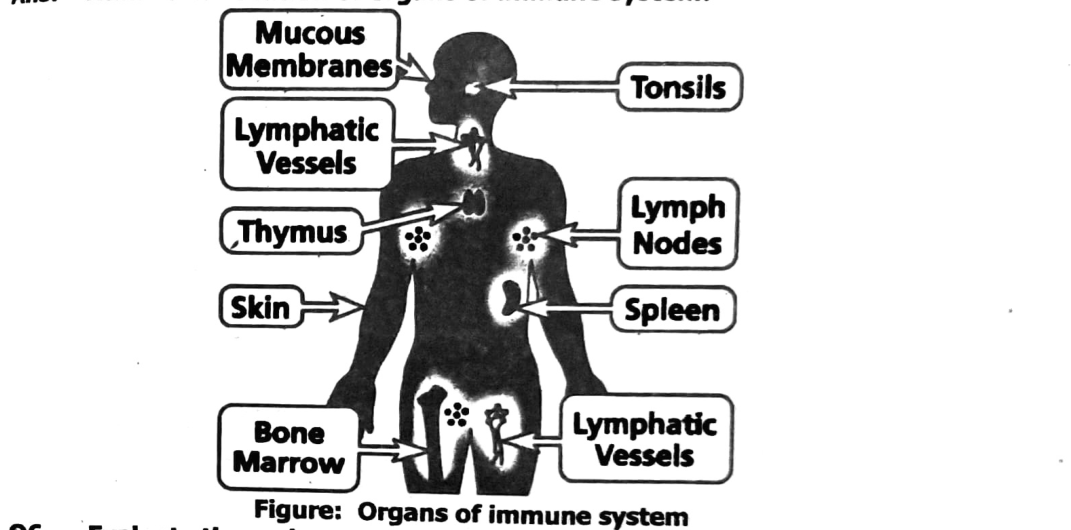
Organs and tissues important to the proper functioning of the immune system are following. Bone marrow, thymus, lymph nodes and vessels, spleen, liver, tonsils, adenoids, skin and mucous membranes.
- Bone Marrow: Red blood cells, many types of white blood cells, and platelets are produced from stem cells found in the spongy interior of the bones. Every day, the bone marrow produces billions of new blood cells and releases them into the blood. B-cells and T-cells are also produced in bone marrow. The B-cell maturation takes place in the bone marrow.
- Thymus: This tiny organ, located in the upper chest below the breast bone, is responsible for T-cell maturation.
- Lymph Nodes and Vessels: The lymphatic system in our body contains lymph vessels and lymph nodes. The networks of lymph vessels are connected by lymph nodes. These tiny nodes filter and kill pathogens to prevent germs from spreading to other body areas. Lymph nodes have collections of B cells and T cells throughout the body. Cells collect in lymph nodes to communicate with each other. Lymph nodes can become swollen when they are fighting an infection.
- Spleen: Spleen is a lymphoid organ located near stomach. Spleen filter blood, capture pathogens in blood, and fight blood infections. The spleen has a collection of B cells, T cells, and monocytes.
- Liver: The liver is the major organ responsible for producing proteins of the complement system, in addition, it contains large numbers of phagocytic cells that eat bacteria in the blood as it passes through the liver.
- Tonsils and adenoids: The adenoids and tonsils function as a part of the body's immune system. Acting as our first line of defence, they trap and kill harmful pathogens like bacteria and viruses that enter our mouth and nose. These are made up of lymphoid tissue which is densely filled with lymphocytes.
- Skin: The human skin serves as a barrier against microbial invasion, protecting the body from potential pathogens. The skin's primary defensive features include:
The outermost layer of the skin is called epidermis. It is composed of tightly packed cells that provide a physical barrier. Skin cells contain a tough protein Keratin, making them resistant to abrasion and water loss.
The skin surface has a slightly acidic pH (around 5.5), which inhibits the growth of many pathogens. The process of shedding dead skin cells helps remove attached microbes. Dermis of skin contains oil glands, sweat glands, hair follicles, receptors, nerves and blood vessels. Oil and sweat play important role in inhibiting and killing microorganisms.
- Mucous membrane: Mucous membranes line digestive and respiratory tracts. The digestive tract mucous membrane kills bacteria present in food by producing stomach acid and digestive enzymes. The respiratory system mucous membrane can trap and remove airborne microbes. It has ciliated epithelium and produces mucus. Mucus traps dust, microbes, and other particles and cilia remove them from respiratory system.
That bone marrow, thymus, lymph nodes and vessels, spleen, liver, tonsils and adenoids are lymphoid organs. All lymphoid organs are connected with lymphatic system.
Skin is the largest organ of the body and plays a key role in the first line of defence.
Types of Immune Cells and Their Roles:
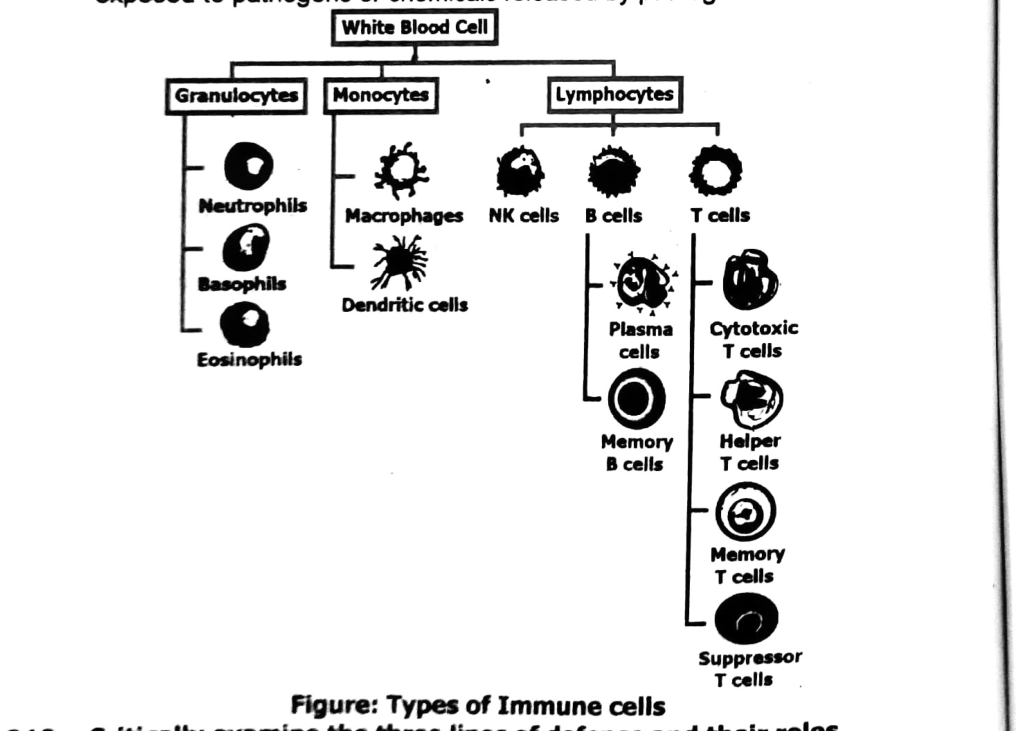
White blood cells (WBC) play a significant role in the immune system by protecting the body from infectious disease and foreign invaders. WBC are of three main types i.e., granulocytes, monocytes and lymphocytes.
(I) Granulocytes:
Granulocytes have granular cytoplasm and nuclei with different shapes. It has three types.
- Neutrophils: Neutrophils rapidly ingests microorganisms and kills them through phagocytosis.
- Basophils: Basophils defend human body from allergens, pathogens and parasites. Basophils release enzymes to improve blood flow and prevent blood clots.
- Eosinophils: Eosinophils protect your body from parasites, allergens, foreign bacteria and outside organisms.
(II) Monocytes:
Monocytes are the largest type of white blood cells. Monocytes typically circulate in the blood for 1–3 days before migrating into tissues, where they become macrophages or dendritic cells.
- Macrophages: Macrophages are specialized cells involved in the detection, phagocytosis and destruction of bacteria and other harmful organisms. In addition, they can also present antigens to T cells and initiate inflammation.
- Dendritic cells: These cells instruct T cells on what to attack, also known as antigen-presenting cells. Dendritic cells are specialized to take up antigen and display it for recognition by lymphocytes.
(III) Lymphocytes:
Lymphocytes help your body’s immune system fight cancer and foreign viruses and bacteria (antigens). Lymphocytes help your immune system remember every antigen it comes in contact with.
There are three types of lymphocyte, NK cells, B – cells and T – cells.
- NK cells: Natural killer cells (NK cells) are found in blood and lymph. They can destroy infected and diseased cells, like cancer cells. NK cells develop in bone marrow, lymph nodes, thymus, liver, and uterus.
- B cells: These lymphocytes arise and mature in the bone marrow. When immune system detects antigens, then B cells produce antibodies to fight the invader pathogen. Activated B cells differentiate into plasma cells and memory B cells.
- Plasma cells: These cells develop from B cells and they make specific type of immunoglobulin (antibodies).
- Memory B cells: After an encounter, some B cells turn into memory B cells. They are long-lived and can produce that specific antibody when the same pathogen attacks in future.
- T cells: These lymphocytes arise in the bone marrow and mature in the thymus. They gather in lymph nodes.
T cells upon activation form four types of T cells.
- Cytotoxic T cells: These are responsible for killing cells infected with viruses.
- Helper T cells: These specialized lymphocytes help other T cells and B cells to perform their functions.
- Memory T cells: These cells are formed. They are long-lived and can protect against the same pathogen in future.
- Suppressor T cells: After infection is controlled suppressor T cells are formed to shut down the immune response.
The antigens are markers that indicate a threat like a bacteria or virus has entered your body. Antigens are present on the surface of all cells.
Components of the Immune System:
The immune system is composed of two basic parts:
- The innate immune system: Individuals are born with this immune system.
- The adaptive immune system: Individuals develop this immunity when exposed to pathogens or chemicals released by pathogens.
The antibodies are highly specialized and specific protein molecules. Antibodies fit foreign antigens, like a lock and key. Antibodies help to kill pathogens and combine with toxins to neutralize them.
Innate Immune System:
People have some immunity from birth, ready to fight against invaders immediately. This response is non-specific and general. It has first and second line of defence.
First Line of Defence:
The external barriers of our body serve as the first line of defence against pathogens. It includes skin and mucous membranes of digestive and respiratory system. The multiple defences including chemical, physical and biological barriers make the first line of defence extremely effective to prevent microbial entry.
Second Line of Defence:
If pathogens successfully enter the skin or mucous membranes, a second line of defence is activated to combat these foreign invaders. It consists of four nonspecific internal defences. First, the body keeps a constant army of phagocytes, neutrophils and natural killer cells which kill pathogens by phagocytosis. Second, the invasion of bacteria produces inflammation which removes pathogens and initiates healing process. Third, the body develops fever to make the environment less favourable for pathogen growth. Fourth, many protective proteins including complement proteins and interferons are produced which kill bacteria and viruses. These defences are nonspecific because they target a large range of germs rather than specific microbes.
Third line of defence/Adaptive (Acquired) Immune System:
The third line of defence is also-called adaptive or acquired immune system, it consists of immune cells that target specific antigens. The immune cells that play a role in the third line of defence are B-cells and T-cells. The B-cells produce antibodies. The T-cells help identify pathogenic cells and destroy targeted cells. This acquired ability to defend against infections improves over time. The body produces a variety of antibodies to various pathogens due to immunizations and exposure to various diseases. When the body creates an antibody, it stores its memory cells so that it can respond more quickly the next time the same pathogen attacks. In general, exposure to many pathogens strengthens the immune system. By adulthood, most people will have been exposed to several pathogens and strengthened their immune systems.
Making healthy food and exercise choices, quitting smoking and drinking, and receiving the necessary vaccinations are all ways to increase immunity.
Main functions of adaptive immunity:
The function of adaptive immunity is to provide a specific and targeted response to pathogens, including:
- Recognition: Identifying and recognizing specific pathogens and antigens.
- Activation: Activating immune cells, such as T cells and B cells, to respond to pathogens.
- Elimination: Eliminating pathogens and infected cells through mechanisms such as antibody production and cytotoxicity.
- Memory: Retaining memory of specific pathogens to enable rapid recognition and response upon future exposure.
- Specificity: Mounting a specific response to a particular pathogen, reducing harm to healthy cells and tissues.
- Adaptation: Continuously adapting and improving the immune response based on experience and exposure to pathogens.
- Protection: Providing long-term protection against specific pathogens and diseases.
Adaptive immunity is a highly specialized and efficient defence mechanism that plays a crucial role in protecting against infections and diseases, and is a key component of the overall immune system.
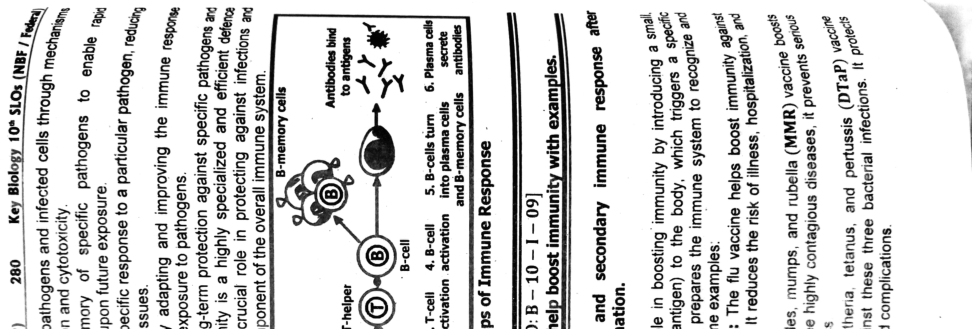
Figure: Steps of Immune Response
The diagram labels the pathogen, macrophage, MHC, T-helper cell, B-cell, B-memory cells, and antibodies binding to antigens. Its numbered steps are:
- Macrophage engulfs the pathogen.
- Presents the pathogen’s antigens.
- T-cell activation.
- B-cell activation.
- B-cells turn into plasma cells and memory cells.
- Plasma cells secrete antibodies.
Vaccines play a crucial role in boosting immunity by introducing a small, harmless piece of a pathogen (antigen) to the body, which triggers a specific immune response. This prepares the immune system to recognize and fight future infections. Here are some examples:
- Influenza (Flu) Vaccine: The flu vaccine helps boost immunity against seasonal influenza viruses. The flu vaccine reduces the risk of illness, hospitalization and death.
- MMR Vaccine: The measles, mumps, and rubella (MMR) vaccine boosts immunity against these three highly contagious diseases; it prevents serious complications and epidemics.
- DTaP Vaccine: The diphtheria, tetanus, and pertussis (DTaP) vaccine helps boost immunity against these three bacterial infections. It protects against severe illnesses and complications.
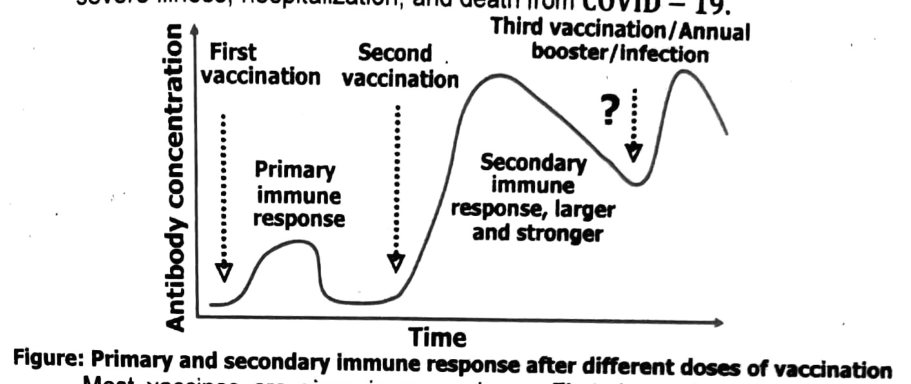
Most vaccines are given in many doses. First dose of vaccine produces primary immune response. Booster doses of vaccine produces secondary immune response. By boosting immunity through vaccination, individuals not only protect themselves but also contribute to herd immunity, helping prevent the spread of diseases in their communities. Vaccination is also called immunization.
Vaccines work by stimulating adaptive immunity, providing protection against specific pathogens.
Edward Jenner developed the first vaccine in 1796 to protect against smallpox.
An allergy is an overreaction of the immune system to a harmless substance, known as an allergen. When an allergen enters the body, the immune system mistakenly identifies it as harmful and attempts to fight it off, leading to an allergic reaction.
Common causes of allergies include:
- Genetics: Family history and genetic predisposition
- Environmental factors: Exposure to allergens at a young age, hygiene hypothesis
- Imbalanced gut microbiome: Alterations in the gut flora
- Overactive immune system: Hyperactive immune response
- Leaky gut syndrome: Intestinal permeability allowing allergens to pass through
Allergens can be:
- Airborne: Pollen, dust mites, mold
- Food: Peanuts, tree nuts, milk, eggs, fish, shellfish
- Insect stings: Bee, wasp, hornet, yellow jacket
- Medications: Antibiotics, nonsteroidal anti-inflammatory drugs (NSAIDs)
- Plants: Poison ivy, oak
- Latex: Gloves, balloons
- Pets: Dog, cat, bird
- Household chemicals: Cleaners, fragrances, cosmetics
Symptoms of allergic reactions:
Symptoms of allergic reactions vary depending on the individual and the allergen, but may include:
- Respiratory issues (congestion, sneezing, coughing)
- Skin problems (hives, itching, rashes)
- Gastrointestinal issues (nausea, diarrhoea)
- Cardiovascular problems (anaphylaxis)
Common Types of Allergies:
Allergies can be broadly classified into four types:
- Inhalation allergies: Airborne and pet allergens can cause respiratory issues on inhalation.
- Ingestion allergies: Food and medications can cause gastrointestinal issues on ingestion.
- Skin contact allergies: Plants, latex and household chemicals can cause skin problems on skin contact.
- Injection allergies: Insect stings and injectable medicines can cause skin issues on injection.
- Anaphylaxis: Anaphylaxis is a severe, life-threatening allergic reaction, it can happen seconds or minutes after you've been exposed to something you're allergic to. Peanuts or bee stings are examples.
If you suspect an allergy, consult a healthcare professional for proper diagnosis and treatment.
SUMMARY
- Immunity is the body's ability to resist or combat infections, diseases, and foreign substances.
- A balanced and functioning immune system is crucial for maintaining health and preventing disease.
- Immune system is an extensive network of tissues, organs, proteins, and cells.
- Organs and tissues of the immune system are bone marrow, thymus, lymph nodes and vessels, spleen, liver, tonsils, adenoids, skin and mucous membranes.
- WBCs protect the body from infectious disease and foreign invaders.
- Innate immunity is the body’s first and second line of defence which prevents infection and attack of invading pathogens, it is present at birth and lasts a person’s entire life.
- Adaptive immunity is a type of specific immunity that develops when immune system responds to foreign substance or microorganism, such as after an infection or vaccination. It includes third line of defence.
- First line of defence is the external barriers of our body to stop entry of pathogens, it is nonspecific and includes skin and mucous membranes.
- Second line of defence is when pathogens successfully enter the skin or mucous membranes, it is activated to combat these foreign invaders. It is nonspecific and includes some WBCs, inflammation, fever and protective proteins.
- Third line of defence is specific adaptive immunity and consists of immune cells that target specific antigens.
- Vaccines boost immunity by introducing a small, harmless piece of a pathogen (antigen) to the body, which triggers a specific immune response.
- Allergy is an overreaction of the immune system to any harmless substance.