
When we burn anything, a chemical reaction called combustion takes place. In this process, the substance reacts with oxygen, producing heat and light energy. Most burning materials also release carbon dioxide, water vapor, and sometimes smoke or other gases. Burning is similar to respiration in that both release energy by breaking down substances using oxygen.
Respiration:
Respiration is the process by which cells obtain energy from glucose. Oxygen is needed for the process of respiration so it is called aerobic respiration. The process, in which oxygen and glucose undergo a series of chemical reactions inside the cell, is called cellular respiration. Respiration is different from breathing. The movement of air into and out of the lungs is called breathing. Respiration is the chemical reaction inside the cell. As a result of respiration the cells release energy that is needed for growth and other cell processes. The respiratory system moves oxygen from outside the environment into the body. It also removes carbon dioxide from the body.
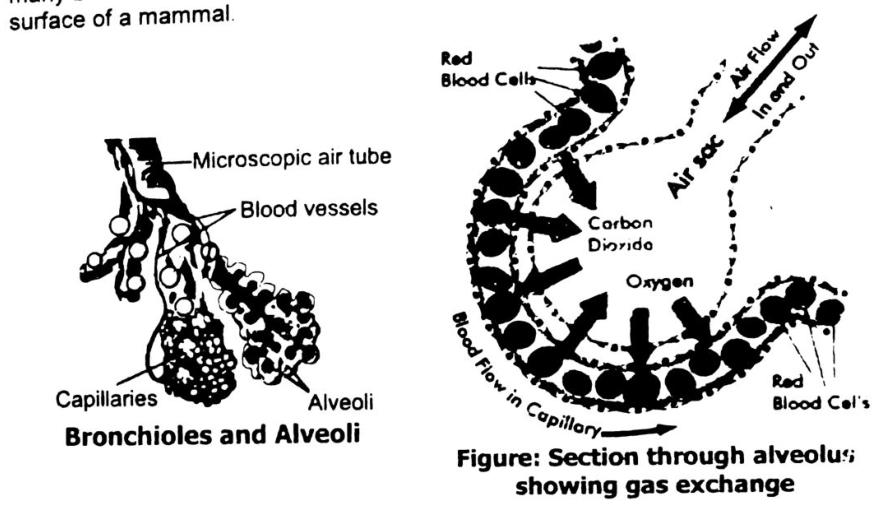
The alveoli are tiny, sac-like structures in the lungs where gas exchange occurs. They are surrounded by capillaries, which allows oxygen to diffuse from the air into the blood and carbon dioxide to diffuse from the blood into the air. Alveoli provide a large surface area for efficient gas exchange. Their thin walls ensure that gases can easily diffuse. The moist environment inside the alveoli helps dissolve gases for faster diffusion.
If the cilia in the trachea were damaged, the body would have difficulty clearing mucus, dust, and pathogens from the respiratory system. This could lead to mucus buildup and increase the risk of respiratory infections like bronchitis. Without cilia to move the mucus out, harmful particles would accumulate, causing further irritation and inflammation in the airways. Over time, this could lead to chronic respiratory issues, making breathing harder and less efficient.
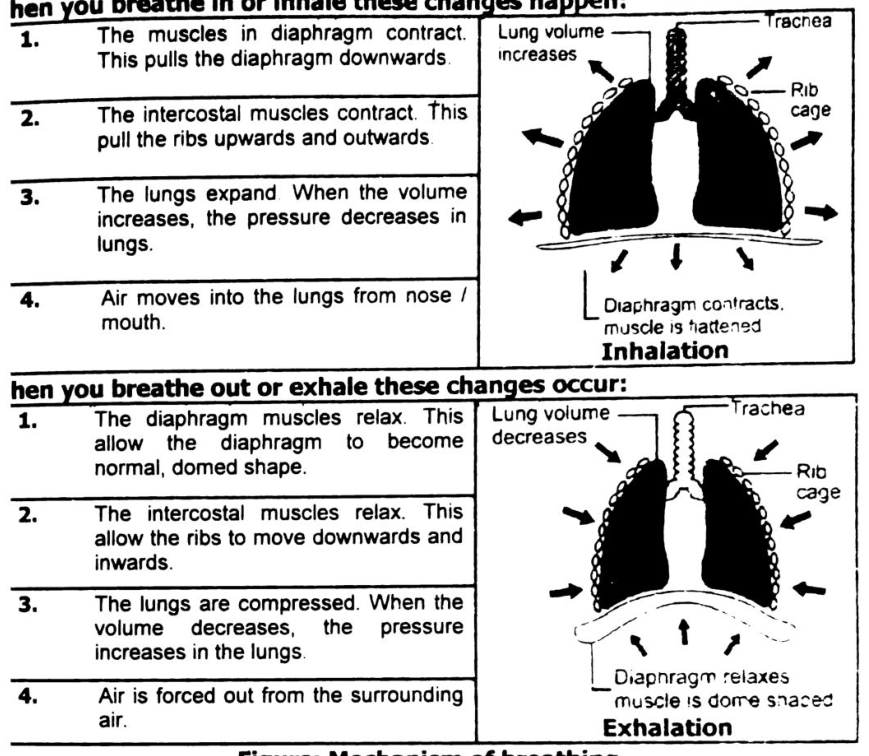
During inhalation, the diaphragm contracts and moves downward, increasing the volume of the thoracic cavity. This decrease in pressure within the lungs allows air to flow in from the higher-pressure environment outside. This action is essential for efficient lung expansion and proper oxygen intake. Without the diaphragm's movement, the chest cavity would not expand properly, making breathing more difficult. Understanding this process highlights how muscular actions contribute to effective respiration and gas exchange.
Air Passage Way
Man faces the same general problems of obtaining oxygen and getting rid of carbon dioxide, as do all other large and complex animals. He must have a moist and thin respiratory surface across which gaseous exchange with the environment can occur. In addition, he must have some means of transporting oxygen and carbon dioxide to and from the cells. We breathe in air to get oxygen and breathe out carbon dioxide. This is called gas exchange.
Air Passageway and Lungs
The organs responsible for gas exchange in man are the two lungs and the air passages which lead to the lungs.
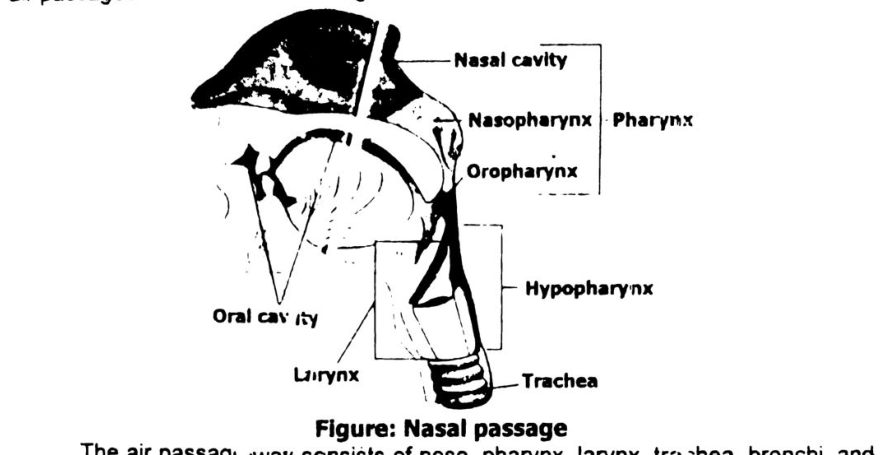
The air passageway consists of nose, pharynx, larynx, trachea, bronchi, and bronchioles.
Nose
The nose is an elevated structure. It is divided into two parts. The external openings of the nose are nostrils having hairs. The nostrils lead into a nasal cavity. The top of the nasal cavity has a lining of nerve cells, which are responsible for sense of smell. The walls and the base of the nasal passage are lined with cilia. Between the ciliated epithelial cells are goblet cells, which produce sticky fluid, called mucus.
The nasal cavity performs important functions. The air entering the respiratory system must be warmed, moistened and filtered to keep the lung tissue healthy. The hairs lining the entrance to the nasal cavity trap large dust particles. The thin layer of mucus moistens the air and also traps particles of dust or smoke. The cilia sweep the trapped particles and mucus towards the pharynx. These are either swallowed or spit out. By the time the air reaches the lungs it is relatively dust free, germ free, warm and moist. These protective measures keep the lungs clean, so that the lungs can perform the important work of gas exchange.
Pharynx
Air is drawn out of the nasal passages into a channel called pharynx, at the back of the mouth. There are several openings in the pharynx. The air is channelized from the pharynx into the larynx. Larynx or voice box is a cartilaginous structure. It surrounds the upper end of the trachea. The cavity of the larynx is called glottis. Epiglottis is a cartilaginous structure.
Trachea
The trachea is a tube running from the pharynx to the lungs. It is held permanently open by C shaped rings of cartilage in its walls. The cartilage rings also keep the trachea open when it develops a low internal air pressure during every intake of breath.
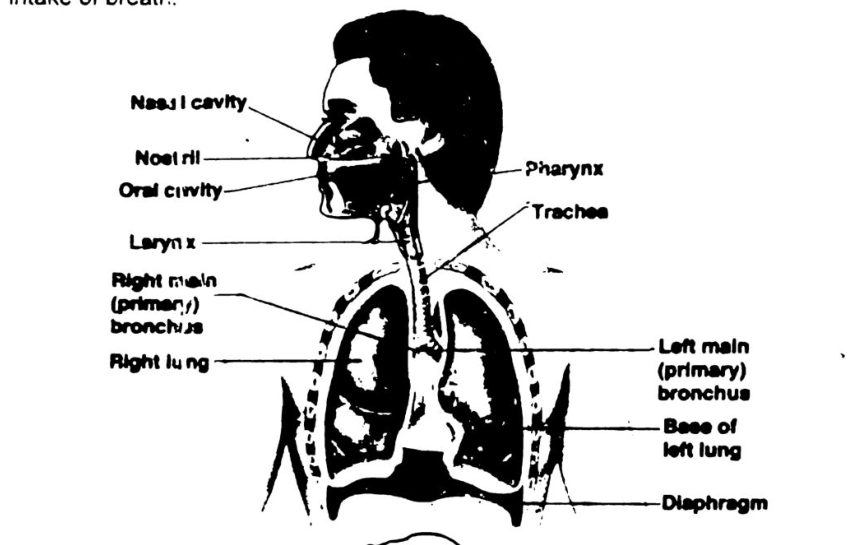
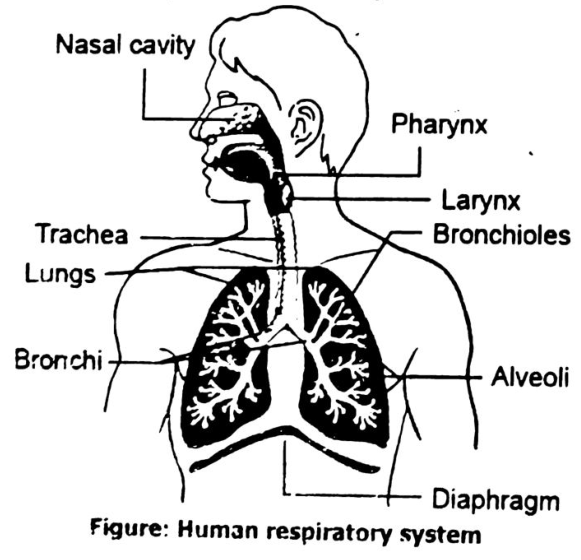
The trachea divides into two bronchus, (Plural: bronchi) the one leading to each lung. Inside the lungs each bronchus divides again and again to form a mass of very fine branches called bronchioles. Bronchi have irregularly shaped plates of cartilage, which keep the tubes permanently open.
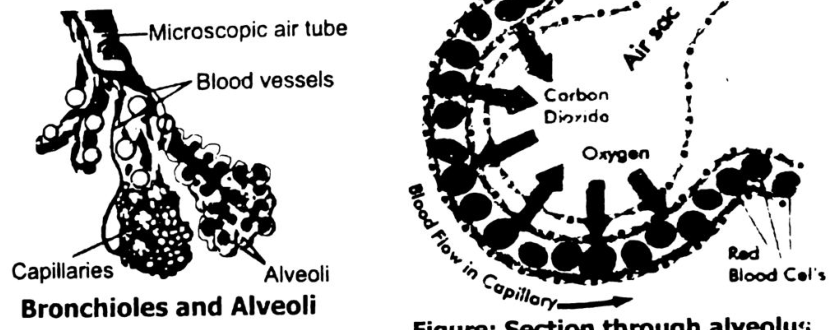
The bronchioles branch into many short tubes of equal diameter called alveolar ducts, which end in tiny hollow bags called air sacs. The air sacs have many bubble-like pockets in their walls called alveoli. The alveoli are the respiratory surface of a mammal.
Lungs:
There are two lungs. The two lungs are lying in the thorax on either side of the heart. The lungs are protected by ribs, and the intercostal muscles. Each lung is surrounded by a membrane called pleura. It is a double membrane. The space between the double membranes is filled by a film of fluid. The fluid enables them to glide over one another.
The lungs are spongy due to presence of alveoli. Alveoli look like bunches of grapes. The arrangement of bubble-like alveoli gives the lungs a far greater surface area. Each alveolus is surrounded by a network of capillaries. Here the real work of respiratory system takes place as the blood and air are side by side. The inner surface of the alveoli has moisture.
Oxygen dissolves in this moisture and then diffuses across the thin-walled blood capillaries into the blood. Carbon-dioxide diffuses in the opposite direction. It diffuses across the membrane of an alveolus and into the air present within the alveolus. Thus, the gas exchange occurs by diffusion across the thin membrane of an alveolus and a capillary.
Importance of Keeping Nasal and oral Cavity Clean:
Anything that enters the body has to pass through the nasal cavity and oral cavity. Air passes through the nasal cavity, if the cavity is clean then air entering lungs will be clean, and thus lungs will be saved from germs and infections. Food passes through the oral cavity to enter the gut. If the oral cavity is not clean germs along with food enter the gut and will cause disorders of gut. You will breathe out bad odour. Your teeth will start decaying.
The diaphragm contracts and moves downward to increase chest cavity volume during inhalation. The external intercostal muscles lift the ribs upward and outward, expanding the chest. During exhalation, the diaphragm relaxes and moves upward, while the internal intercostals pull the ribs downward and inward, reducing chest volume and expelling air.
Weakened intercostal muscles would make it difficult to expand and contract the chest properly, resulting in shallow and inefficient breathing. The ribs would not lift effectively during inhalation, limiting airflow, and air would not be expelled efficiently during exhalation, reducing overall oxygen intake.
The movement of the ribs changes the chest cavity's volume, aiding in the intake and expulsion of air. During inhalation, the ribs lift, expanding the chest and allowing air to flow in. During exhalation, the ribs lower, decreasing the chest cavity's volume, and pushing air out of the lungs.
Mechanism of Breathing:
Breathing is a mechanical process. It is the movement of air into and out of the lungs. The force that drives air into the lungs comes from ordinary air pressure. The lungs themselves neither draw in air nor push it out. The expansion and contraction of the lungs is accomplished by the diaphragm, and by intercostal muscles.
The mechanism of breathing consists of two phases:
- Inspiration or inhalation.
- Expiration or exhalation.
When you breathe in or inhale these changes happen:
- The muscles in diaphragm contract. This pulls the diaphragm downwards.
- The intercostal muscles contract. This pull the ribs upwards and outwards.
- The lungs expand. When the volume increases, the pressure decreases in lungs.
- Air moves into the lungs from nose / mouth.
When you breathe out or exhale these changes occur:
- The diaphragm muscles relax. This allow the diaphragm to become normal, domed shape.
- The intercostal muscles relax. This allow the ribs to move downwards and inwards.
- The lungs are compressed. When the volume decreases, the pressure increases in the lungs.
- Air is forced out from the surrounding air.
Inspired air contains about 21% oxygen, 0.04% carbon dioxide, and 78% nitrogen. In contrast, expired air has about 16% oxygen, 4% carbon dioxide, and still 78% nitrogen, as nitrogen is not used in respiration. The oxygen level drops because it is used in the body's cells during respiration. Carbon dioxide increases as it is a waste product formed during energy release. Additionally, expired air has more water vapor and is warmer, due to moisture and heat from the lungs.
A pulse oximeter helps measure how much oxygen is present in a person's blood, indicating how well their respiratory system is functioning. If someone has breathing issues or is under anesthesia, this tool helps check if enough oxygen is reaching the body's tissues. A drop in oxygen levels can be dangerous, so this device helps detect problems early. It applies the concept of gas exchange, as poor oxygen levels suggest that the lungs may not be absorbing oxygen efficiently. This information can guide treatments or oxygen support.
During cellular respiration, the body uses oxygen to break down glucose and release energy. This process produces carbon dioxide as a waste product. The carbon dioxide is then carried by the blood to the lungs, where it is expelled during exhalation. That's why expired air has a much higher concentration of carbon dioxide than inspired air. This shows how the respiratory and circulatory systems work together to remove waste gases from the body.
Difference between composition of inspired and expired air:
| Gas | Inspired Air | Expired Air | |
|---|---|---|---|
| 1. | Oxygen | 21% | 16% |
| 2. | Carbon dioxide | 0.04% | 4% |
| 3. | Nitrogen | 79% | 79% |
| 4. | Water vapour | Variable | Saturated |
| 5. | Temperature | Variable | About body temperature |
| 6. | Dust particles | Variable | Little, if any |
Oxygen is needed for respiration. Respiration is needed for energy, thus the net result of breathing in fresh air is to get more energy. Fresh air is free of pollutants i.e., carbon monoxide, smoke, chemicals and other disease-causing agents. Thus, breathing in fresh air is the best way of prevention from many infections and diseases.
STEAM ACTIVITY 3.1 RELEASE OF CARBON DIOXIDE THROUGH RESPIRATION
Aim:
To show that $CO_2$ is produced during respiration. The composition of $CO_2$ in the air we breathe out is more than that of the normal air.
Materials needed:
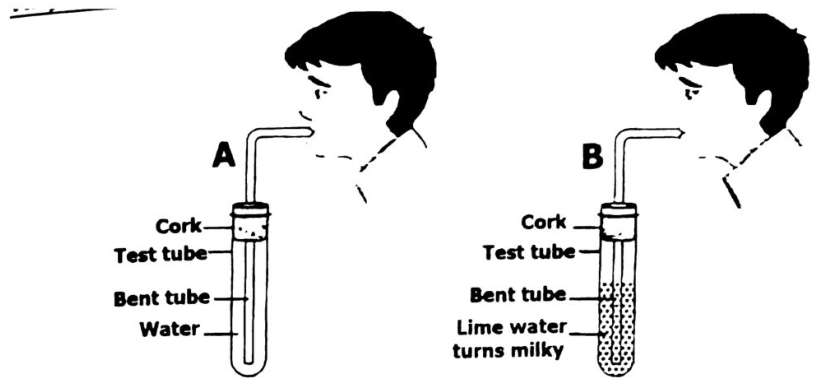
Two test tubes, freshly prepared lime water, water, bent glass tube.
Procedure:
- Pour water in test tube labelled A.
- Pour the freshly prepared lime water into test tube labelled B.
- With the help of a bent glass tube, blow air in the test tube labelled A and B.
Observation:
The lime water in test tube B turns milky, showing that we exhale $CO_2$. In test tube A, there is no change of colour in water.
Inference:
Lime water turns milky when $CO_2$ is mixed with it. Air blown from the mouth contains $CO_2$, approximately 4%. The composition of $CO_2$ in atmosphere is 0.04%. This proves that the percentage of $CO_2$ in the air during exhalation is higher than the $CO_2$ in the atmosphere.
Questions:
- Which process is being tested in the activity?
Ans: Exhalation process during respiration. - What is the result of the activity? Give reasons.
Ans: The lime water in test tube 'B' turns milky but water in tube 'A' remains unchanged. Because $CO_2$ is present in the exhaled air, it mixes with lime water in 'B' and turns it milky.
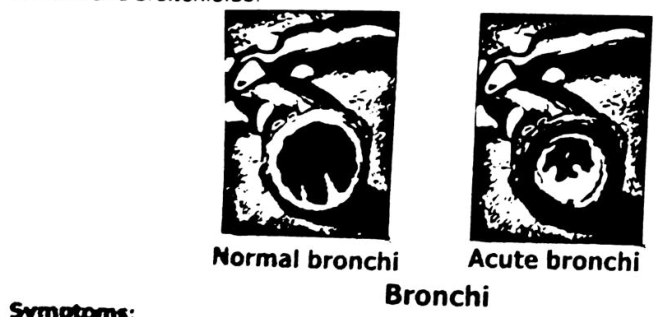
Bronchitis is the inflammation of the bronchial tubes, which carry air to and from the lungs. This inflammation leads to swelling, excess mucus production, coughing, and difficulty breathing. It can be acute, caused by infections, or chronic, often due to smoking or air pollution. In bronchitis, narrowed airways reduce airflow, making it harder for oxygen to reach the lungs. The constant irritation can also weaken the lungs over time.
Lifestyle choices such as smoking or prolonged exposure to polluted air significantly increase the risk of diseases like emphysema and lung cancer. Smoking damages the alveoli, reducing the lungs’ ability to exchange gases in emphysema. In lung cancer, harmful substances from smoke cause cells to mutate and grow uncontrollably. Avoiding tobacco, reducing exposure to air pollutants, and maintaining a healthy environment can reduce the risk. This shows how personal habits directly affect respiratory health.
Asthma makes breathing difficult because the airways become inflamed and narrowed, and sometimes fill with mucus, often in response to triggers like dust, cold air, or exercise. It's a chronic condition that comes and goes with flare-ups. Pneumonia, on the other hand, is an infection of the alveoli, which causes them to fill with fluid or pus, making gas exchange hard. Asthma affects the airways, while pneumonia affects the alveoli. Understanding their causes and affected areas helps in identifying and treating them properly.
OR
State the symptoms, causes and treatments of:
- bronchitis
- emphysema
- pneumonia
- asthma
- lung cancer.
Diseases Related to Respiratory System:
The common respiratory disorders are Bronchitis, Emphysema, Pneumonia, Asthma and Lung cancer.
a. Bronchitis:
Bronchitis is the inflammation of lining of the air passages like trachea, bronch and bronchioles.
Symptoms:
One of the symptoms is secretion of excess mucus from the goblet cells in response to the irritation. The main symptom is cough, which occurs repeatedly. Coughing and breathlessness increases as the disease progress. Bronchitis can be acute or chronic.

Cause:
Acute bronchitis usually lasts a few days only and is a side effect of viral infections like flu. Chronic bronchitis is most commonly caused by smoking and, to a lesser extent, by air pollution. It may last for months. The sensation of breathlessness occurs due to reduced gases exchange.
Acute bronchitis: Short term bronchitis inflammation of the bronchi of the lungs.
Chronic bronchitis: It is the long term inflammation and irritation of the bronchi.
Treatment:
The infection will generally go away on its own within one week. One should take the following steps for some relief:
- (i) Do not smoke.
- (ii) Drink plenty of fluids.
- (iii) Take rest.
- (iv) An inhaler may be taken.
- (v) If your doctor thinks that you have a secondary bacterial infection, antibiotics may be prescribed.
b. Emphysema:
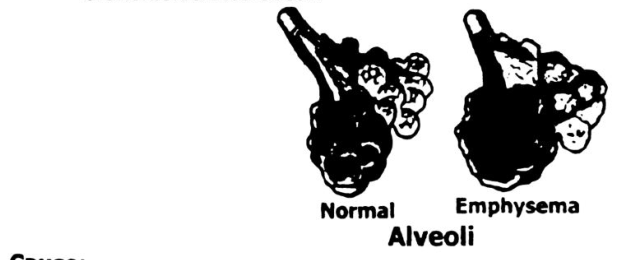
Emphysema is a respiratory disease where there is over-inflammation of the alveoli in the lungs, causing a decrease in lung function.
Symptoms:
The main sign of emphysema is increasing breathlessness. In advance case the patient finds it difficult to walk. The lungs loose elasticity, so that it becomes more difficult to exhale air. Inflammation and narrowing of the finer bronchioles also occur.
Cause:
It is due to gradual breakdown of the thin walls of alveoli and the total surface area for gaseous exchange decreases. The main cause is the long-term irritation of the lungs, most commonly by cigarette smoke, air pollution or industrial dust.
Treatment:
Treatment methods for emphysema do not cure or reverse the damage to the lungs. The best way to prevent emphysema is to avoid smoking. A variety of medications may be used in the treatment of emphysema.
c. Pneumonia:
Pneumonia is defined as an inflammation of alveoli of lungs caused by acute infection. Double pneumonia is a lung infection that affects both lungs.
Symptoms:
Fever, shaking chills, chest pain, cough, headache, sore throat, nausea-diarrhoea etc.
Cause:
The most common cause of pneumonia is bacteria Streptococcus pneumoniae.
Treatment:
Antibiotics are prescribed for bacterial pneumonia.
d. Asthma:
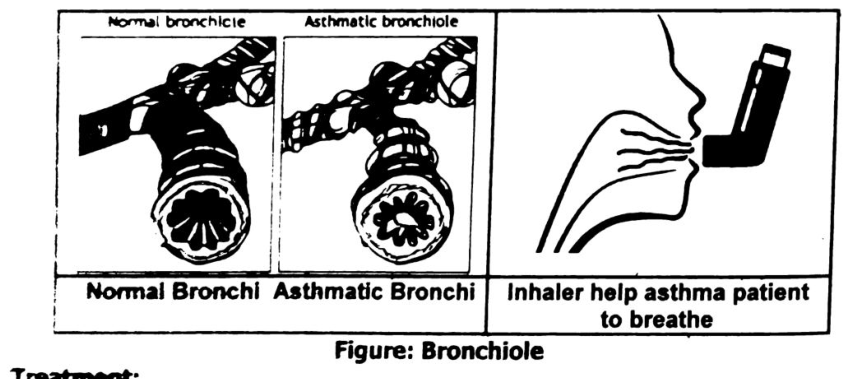
Asthma is the common chronic inflammatory disease of the airways.
Symptoms:
The person has more difficulty in breathing out than breathing in. A characteristic whistling sound is caused by breathing. There is secretion of excess of mucus and swelling of the lining of the respiratory pathway.
Cause:
It is due to an allergic response to substances like pollen, household dust, a particular food or feathers from pillow, cold air, exercise, and smoking etc., emotional disturbance may also provoke an attack.
Treatment:
Mild attack of asthma is controlled with bronchodilators that dilate the airway. Different devices called inhalers help asthma patient to breathe. Asthma is a chronic disease that has no cure. Asthma is treated with two types of medicines: long-term control and quick-relief medicines.
e. Lung Cancer:
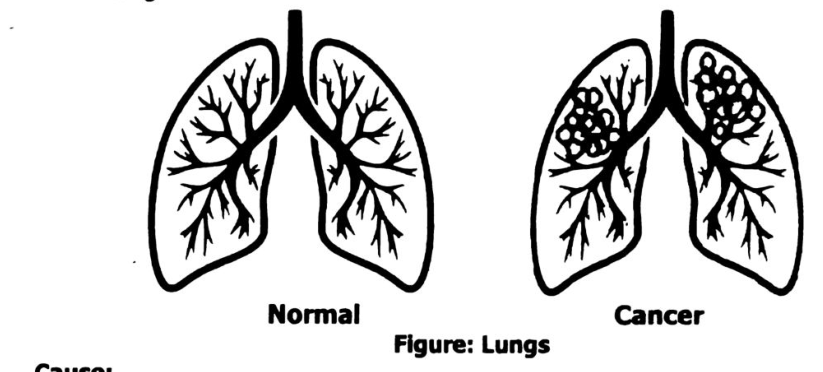
Cancer is caused by cells dividing repeatedly out of control and form unspecialized masses of cells called tumours. Lung cancer usually starts in the epithelium of the bronchioles. It then usually spreads throughout the lungs.
Symptoms:
The first event appears to be thickening and callusing of the cells lining the bronchi. Then there is a loss of cilia, so that it is impossible to prevent dust and dirt from settling in the lungs. After that a tumour consisting of cancerous cells with a typical nucleus appears at one location. Due to metastasis the cancer spreads. The tumour may grow until the bronchus is blocked, cutting off the supply of air to that lung.
Cause:
Tobacco smoke is the main cause of cancer. Air pollution also increases the risk of lung cancer specially car exhaust, asbestos and arsenic.
Treatment:
The only treatment is pneumonectomy i.e., to remove a lobe or the lung completely or destroying it through radiation.
Bad effects of smoking:
It causes cancer, chronic bronchitis, emphysema, early morning cough. Smokers are likely to get pneumonia. Smoking can make it hard to breathe. Smoking can also worsen asthma and allergies.
STEAM ACTIVITY 3.2 Construction of lung model: An experiment to demonstrate how the diaphragm works during breathing
Materials needed:
2 litre plastic bottle, Straws, Scissors, Quality tape, 3 large balloon, Plasticine / Blu-Tac, Elastic bands
Procedure:
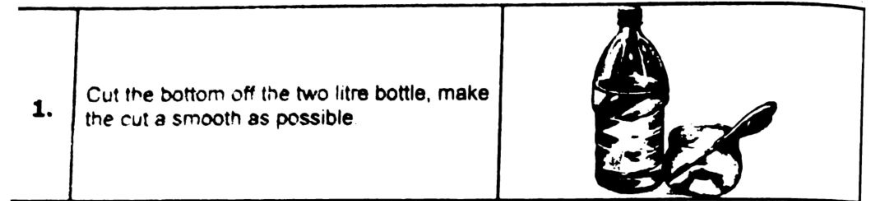
- Cut the bottom off the two litre bottle, make the cut as smooth as possible.
- Create a Y shaped connector. Cut one straw open 1cm from the end and fold it out to create two small legs to make a Y. Cut 8 cm off the 2nd straw, gently fold in half and cut out a 2 cm, diamond shape hole in the middle. Place Y of straw 1 over the diamond shaped hole in straw 2 and tape it in place. Make the seal airtight.
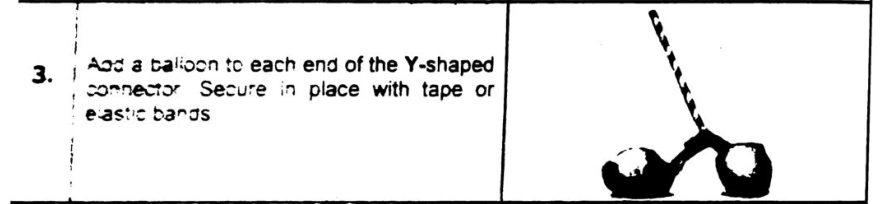
- Add a balloon to each end of the Y-shaped connector. Secure in place with tape or elastic bands.
- Place the balloon and straw connector structure inside the plastic bottle. Carefully thread the long straw portion through the neck of the bottle.
- Create an airtight seal around the straw and bottle using tape. Alternatively, drill a hole in bottle top to thread straw through and seal with Plasticine / BluTac.
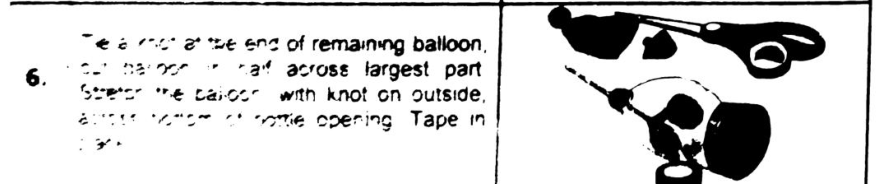
- Cut a large section of the remaining balloon. Stretch this piece across the largest part of the bottle with the knot on the outside, covering the opening. Tape in place.
Looking at the result:
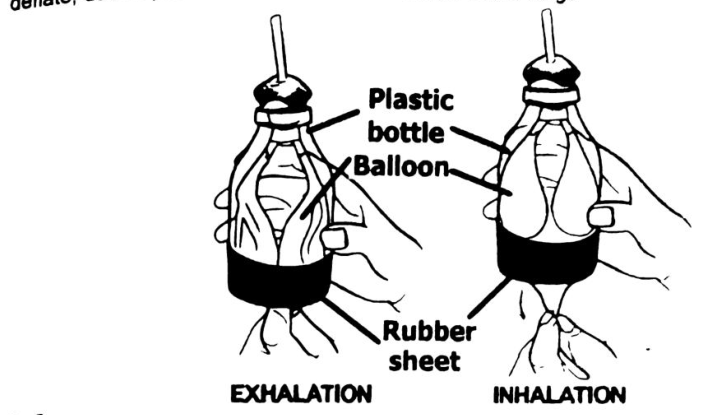
Hold the large, bottom balloon and pull it down gently; observe the balloons.



Observation:
From this model we can conclude that when we pull down the balloons inflate and deflate, due to pressure inside the bottle similar to the lungs.
Inference:
On comparing this model with our respiratory system we can infer that the balloons represent the lungs, the bottle represents the thorax and the rubber sheet represents the diaphragm.
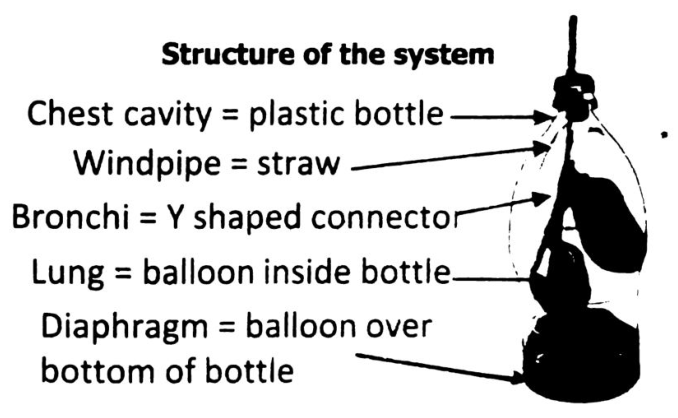
Structure of the system
- Chest cavity = plastic bottle
- Windpipe = straw
- Bronchi = Y shaped connector
- Lung = balloon inside bottle
- Diaphragm = balloon over bottom of bottle
SUMMARY
- Respiration is the exchange of oxygen and carbon dioxide between cells and the environment.
- Respiration is the process by which cells obtain energy from the glucose.
- The air passage consists of nose, pharynx, larynx, trachea, bronchi and bronchioles.
- Nose provides air for respiration, conditions the air by filtering, warming, and moistening it and cleans itself of foreign debris extracted from inhalations.
- Air is drawn out of the nasal passage into pharynx.
- The tube running from the pharynx to the lungs is called trachea which divides into two bronchi.
- Inside the lungs each bronchus divides to form bronchioles.
- The bronchioles divide into alveolar ducts which end into air sacs. The air sacs have alveoli.
- The lungs are the pair of spongy, pinkish-grey organs where exchange of gases takes place.
- Breathing is the movement of air into and out of the lungs.
- Inhalation is the process by which other gases or air enters the lungs.
- During exhalation, the diaphragm relaxes and moves upward, causing compression of the lungs and an outward flow of air.
- The common respiratory disorders are bronchitis, emphysema, asthma, pneumonia and lung cancer.