
Short Questions:
Artificial Pancreas:
An artificial pancreas is a medical device system designed to automatically monitor and regulate blood glucose levels in individuals with Type 1 diabetes. It mimics the function of a healthy pancreas by using a continuous glucose monitor (CGM), an insulin pump, and a computer-controlled algorithm.
Role:
- Maintains normal blood glucose levels.
- Automatically adjusts insulin delivery based on real-time glucose readings.
- Reduces the risk of hypoglycemia and hyperglycemia.
- Lessens the daily burden of diabetes management.
- Helps prevent long-term complications associated with uncontrolled diabetes.
Biomarkers in Sugar Control:
Biomarkers are measurable indicators used to monitor and manage blood sugar levels in diabetes. Key examples include:
- Glucose: Directly measured for immediate sugar levels.
- HbA1c: Shows average blood sugar over 2–3 months.
- Insulin and C-peptide: Indicate insulin production.
- Inflammatory markers: Help assess risk of complications.
These biomarkers help diagnose diabetes, monitor treatment, and guide personalized care.
Genetic engineering in agriculture:
- Genetic engineering has increased crop yields, reduced need for pesticides, enhanced nutrient composition and food quality.
- Genetic engineering can give plants insect resistance e.g., the gene of scorpion poison is combined with cabbage. This GMO cabbage is lethal to caterpillars but harmless to humans.
- Certain genes are inserted into the plants that give them resistance against pathogens such as viruses, fungi, and insects.
- Genetic engineering can be used to produce plants that are resistant to herbicides. Herbicide resistance enables farmers to kill most weeds from the fields without damaging their crops.
Factors for Effective Cancer Management and Treatment:
- Type and Stage: Determines spread and severity.
- Early Detection: Improves treatment success.
- Accurate Diagnosis: Guides appropriate therapy.
- Patient’s Health: Affects treatment tolerance.
- Treatment Choice: Surgery, chemo, radiation, etc.
- Genetic Markers: Enable personalized treatment.
- Healthcare Access: Ensures timely and quality care.
- Patient Compliance: Ensures effectiveness of treatment.
Marine Biotechnology in Medicinal and Cosmetic Products:
- Medicinal Use: Marine organisms provide bioactive compounds used in antibiotics, anticancer drugs, anti-inflammatory agents, and antivirals (e.g., compounds from sponges and algae).
- Cosmetic Use: Marine extracts (like collagen, algae, and seaweed) are used in anti-aging creams, moisturizers, and sunscreens for their antioxidant and skin-repair properties.
Microbes Involved in Baking and Dairy Products:
(a) Baking:
Yeast (Saccharomyces cerevisiae): Used for fermentation in bread-making. It ferments sugars to produce carbon dioxide and alcohol, which helps dough rise.
Dairy Products:
Lactic Acid Bacteria (LAB):
- Lactobacillus spp.
- Streptococcus thermophilus
- Lactococcus lactis
(b) Source of Sugars in Brewing:
The sugars used in brewing come primarily from barley (malted barley), which is rich in starch. During the malting process, starch is broken down into fermentable sugars like maltose that yeast ferments to produce alcohol and carbon dioxide.
(c) How Bubbles of Carbon Dioxide Gas Help to Make Bread:
In bread-making, yeast ferments the sugars present in the dough, producing carbon dioxide gas as a byproduct. The carbon dioxide bubbles become trapped in the dough, causing it to rise and expand. This process creates a light, airy structure in the bread. As the dough bakes, the trapped gas continues to expand, further contributing to the soft and spongy texture of the bread. The result is a well-risen loaf with a fluffy interior.
Difference between Gene knockdown and Gene knockout:
| Feature | Gene Knockdown | Gene Knockout |
|---|---|---|
| Definition | Reduces gene expression without eliminating it. | Completely eliminates or inactivates a gene. |
| Method | Techniques like RNA interference (RNAi) or antisense oligonucleotides. | Techniques like CRISPR-Cas9, gene editing, or homologous recombination. |
| Effect on Gene | Partial or temporary reduction in gene activity. | Complete loss of gene function or absence of the gene. |
| Reversibility | Can be reversible or temporary. | Permanent or irreversible. |
| Study Focus | Study the effects of reduced gene function. | Study the effects of complete gene loss. |
| Applications | Functional genomics, screening gene silencing effects. | Understanding gene function by observing complete absence. |
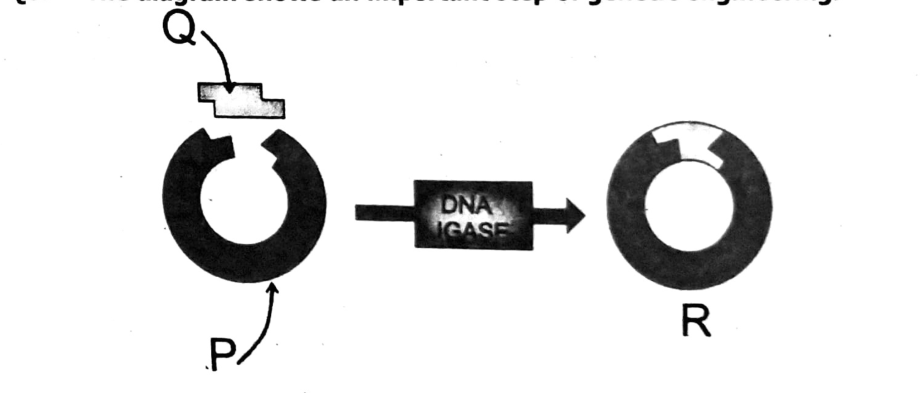
(a) Name the structures P, Q and R.
Q = Gene
P = Plasmid Vector Cut
R = Recombinant plasmid
(b) What is the next step of this process?
Recombinant plasmid is inserted into a bacterial cell.
Name of three major genetic editing techniques:
- CRISPR-Cas9
- Transcription Activator-Like Effector Nucleases (TALENs)
- Zinc Finger Nucleases (ZFNs)
Long Questions:
Importance of Biotechnology:
Biotechnology has great importance in agriculture, medicine and industry.
The following are some areas of the application of biotechnology.
- Biotechnology in Agriculture:
Plants having resistance against insecticides, virus, and herbicides have been produced using biotechnology. Salt tolerant, drought tolerant, cold tolerant plants have been produced. Improved yields in cereals, rice, corn, cotton etc., have been obtained. - Biotechnology in Food:
The baking of bread and the production of cheese all depends on fermentation process brought about by yeasts, other fungi and bacteria. - Biotechnology in Health and Medicine:
Biotechnology includes genetic engineering. Today through genetic engineering bacteria now produce drugs that promote human health. Antibiotics are produced by fungi or bacteria.
- Biotechnology in industries:
The production of industrial chemicals such as citric acid or lactic acid needs bacteria or fungi to bring about essential chemical changes.
- Biotechnology in Environment:
Sewage disposal depends on bacteria which purifies the sewage. Bacteria have been used to clean up environmental pollutants, increase the fertility of the soil and kill insect pest.
(Second Answer)
Importance of Biotechnology:
Biotechnology plays a very important role in human welfare and has revolutionized mankind since its existence. It contributes much towards the human welfare and their health needs. A few of them are listed below:
- Biotechnology in Agriculture:
The application of biotechnology in the agriculture field helps in improving food quality, quantity, and processing.
Bio-fertilizers and bio-pesticides are eco-friendly sources for agriculture, which contain living microorganisms that help in promoting growth by increasing the supply or availability of primary nutrients. Farmers choose biotech crops to increase the yield and lower production costs. - Biotechnology in Medicine:
In the field of medicines, biotechnology is widely used in the development of several innovative techniques for diagnosing, treating and preventing diseases. It helps in providing effective treatments and prevention measures for different diseases through its inventions of novel drugs and recombinant vaccines.
Therapeutic proteins have a greater effect against a variety of non-communicable diseases, which were responsible for over 50-60% of deaths in developing countries.
With the help of modern biotechnology, many diagnostic tools have been introduced for the detection of diseases in a quick and accurate manner. - Biotechnology in Flora and Fauna:
Biotechnology develops the process of micropropagation system, a new method of plant breeding for producing many new plant species and new varieties with highly desirable characteristics.
Productions of genetically engineered plants with highly desirable characteristics have been very effective. These crops result from the alteration in the genetic makeup of the crops and this modification leads to a number of potential advantages including the production of crops, quality of crops, increased nutritional qualities of food crops, improved taste, texture or appearance of food,
reduced dependence on fertilizers, pesticides and other agrochemicals and lot more.
Biotechnology has a wide application in animal husbandry. Several transgenic animals were produced to transfer the growth hormones and improve the efficiency of egg, meat and milk production.
iv. Biotechnology in Environment:
Biotechnology is also involved in controlling environmental pollution through biodegradation of potential pollutants, recycling of wastes and other waste treatment technologies.
Biotechnology plays a major role in monitoring and controlling environmental pollution through biological applications including bioremediation, biomonitoring, biotreatment and biodegradation of all solid, liquid and gaseous wastes. Apart from these, there are many other biotechnological treatments applied to monitor the different components of the environment.
v. Biotechnology in Human Health and their Welfare:
Biotechnology has been playing a dynamic role in improving the challenges regarding human health and welfare. There are many more research and investigation processes carried out for improving future technologies.
Biotechnology has played a significant role in improving human health by producing enriched nutrients in food products such as Golden Rice, potatoes, maize, groundnuts, soybean etc.
Fermentation:
Fermentation is the anaerobic respiration in which glucose is broken down with the release of comparatively small amount of energy which takes place in yeast and bacteria.
Fermentation by Yeast:
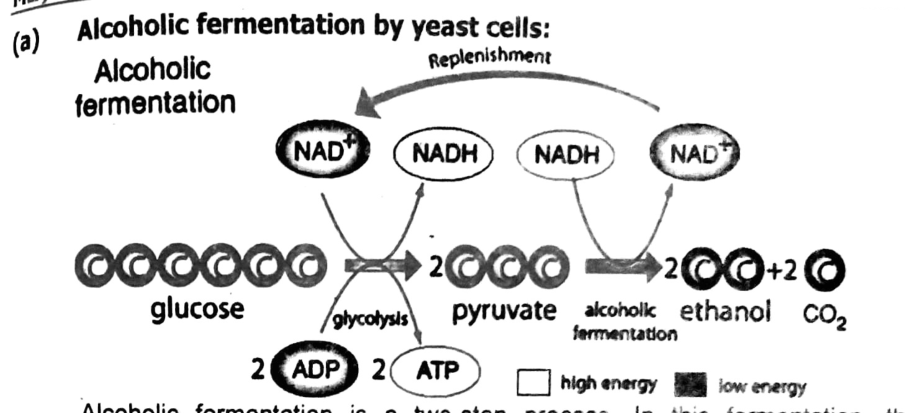
In yeast glucose is oxidized to alcohol. It is called alcoholic fermentation. Carbon dioxide produced by yeast is useful in baking industry.
Glucose → Pyruvate → Acetaldehyde → Ethyl alcohol + CO2
Fermentation by Bacteria:
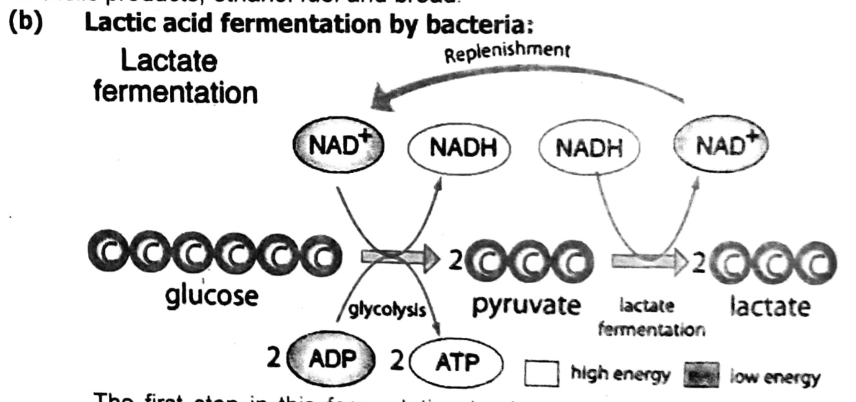
In bacteria glucose is oxidized to lactic acid. It is called lactic acid fermentation, which is used in the dairy industry to make cheese and yogurt.
Glucose → Pyruvate → Lactic Acid
Fermentation:
The term “fermentation” is used for two concepts i.e.
- As a type of cellular respiration.
- As a technique in modern biotechnology.
Fermentation as a type of cellular respiration:
Anaerobic respiration is also called fermentation. It happens in the absence of oxygen. In this process, glucose is oxidized incompletely and a little amount of energy is released. It occurs in different organisms and is of two types.
(a) Alcoholic fermentation by yeast cells:
Alcoholic fermentation is a two-step process. In this fermentation, the glucose molecule is first broken down into two molecules of pyruvic acid. This step is called glycolysis. In the next step, pyruvic acid is further broken down into carbon dioxide and ethanol. This fermentation occurs in yeast (Saccharomyces cerevisiae). Scientists use this process to produce alcohol during the making of alcoholic products, ethanol fuel and bread.
(b) Lactic acid fermentation by bacteria:
The first step in this fermentation is similar to alcoholic fermentation. The glucose molecule is broken down into two molecules of pyruvic acid. In the second step, hydrogen is added to pyruvic acid (reduction), which changes it to lactic acid. This fermentation occurs in bacteria e.g. Lactobacillus and Streptococcus. Lactic acid fermentation done by bacteria is used to turn milk into yogurt.


Modern research on cancer biotechnology focuses on various key areas aimed at improving diagnosis, treatment, and prevention of cancer. Here are some of the most important areas of research:
- Cancer Immunotherapy:
Immune Checkpoint Inhibitors:
Researchers are exploring drugs that block immune checkpoints (e.g., PD-1 / PD-L1 inhibitors) to boost the immune system's ability to recognize and attack cancer cells.
- Cancer Immunotherapy:
- CAR-T Cell Therapy:
Chimeric Antigen Receptor T-cell therapy involves modifying a patient’s T cells to target specific cancer cells. This has shown promise, especially in blood cancers like leukemia and lymphoma. - Cancer Vaccines:
Vaccines that stimulate the immune system to target and destroy cancer cells (e.g., HPV vaccine for cervical cancer and other cancers).
- Targeted Therapy and Personalized Medicine:
- Gene Editing and Targeting: Using techniques like CRISPR-Cas9 to target and modify cancer-related genes, aiming to correct mutations or suppress oncogenes.
- Molecular Targeting: Identifying specific molecules or pathways involved in cancer cell growth (e.g., HER2 in breast cancer) and designing drugs to specifically target them, minimizing damage to healthy cells.
- Liquid Biopsy: A non-invasive method to detect cancer-related genetic mutations through blood tests, offering real-time insights into tumor dynamics and aiding in personalized treatment approaches.
- Cancer Metabolism: Cancer cells often undergo metabolic changes (e.g., the Warburg effect) to support rapid growth. Researchers are studying these alterations to develop drugs that target cancer cell metabolism, such as inhibiting pathways that provide energy to tumors.
- Tumor Microenvironment (TME) and Cancer Stroma:
- Understanding the role of the tumor microenvironment (which includes surrounding blood vessels, immune cells, and connective tissue) in supporting tumor growth and metastasis.
- Research is focused on disrupting the interaction between cancer cells and their microenvironment, aiming to inhibit tumor progression and make therapies more effective.
- Cancer Stem Cells (CSCs):
- Cancer stem cells are believed to be responsible for tumor initiation, metastasis, and recurrence. Research aims to identify and target CSCs to prevent relapses and improve long-term cancer control.
- Scientists are investigating drugs or therapies that specifically target CSCs without harming normal stem cells.
- Gene Therapy and RNA-based Therapeutics:
- Gene Therapy: Introducing or modifying genes within cancer cells or a patient’s immune cells to fight cancer more effectively.
- RNA-based Therapies: Including small RNA molecules, like siRNA or mRNA, to silence cancer-related genes or correct genetic mutations. mRNA vaccines are also being explored for cancer immunotherapy.
- Cancer Epigenetics: Epigenetic changes (modifications to DNA that affect gene expression without altering the genetic code) play a significant role in cancer development. Researchers are studying epigenetic drugs that can reverse these changes and restore normal gene function in cancer cells.
- Cancer Diagnostics and Early Detection:
- Next-Generation Sequencing (NGS): Used for detecting genetic mutations and alterations in cancer cells, allowing for earlier and more accurate diagnosis.
- Artificial Intelligence (AI) and Machine Learning: AI is being used to analyze vast amounts of genomic and clinical data to identify potential biomarkers for early cancer detection and predict treatment responses.
- Biomarkers: Identifying and validating biomarkers in blood, urine, or other fluids for non-invasive and early cancer detection, leading to more personalized treatment approaches.
- Nanotechnology in Cancer Treatment:
- Nanoparticles: Researchers are exploring the use of nanoparticles to deliver drugs directly to cancer cells, increasing drug efficacy and minimizing damage to healthy cells.
- Nanoimaging: Nanotechnology is also being developed for imaging cancer at the cellular level, enabling better diagnosis and real-time monitoring of tumor progression.
- Cancer Research in Preventive and Adjuvant Therapy:
- Chemoprevention: Investigating natural compounds or synthetic drugs that can prevent the development of cancer or reduce the risk of recurrence after treatment.
- Adjuvant Therapies: Researching therapies that can be used alongside traditional treatments (such as chemotherapy or radiation) to enhance effectiveness or reduce side effects.
- Cancer Metastasis and Resistance:
- Understanding how cancer cells spread to other parts of the body (metastasis) and developing drugs to inhibit this process.
- Studying the mechanisms behind drug resistance, which is a major challenge in cancer therapy, and developing ways to overcome it.
Objectives of the genetic engineering:
Genetic engineering is the collection of techniques used to:
- Isolate particular genes to treat genetic defects by gene therapy.
- Have clone of genes.
- Boost the growth and yield of a crops and farm animals.
- Produce particular proteins and RNA molecules.
- To produce many products of interest such as hormones and vaccines.
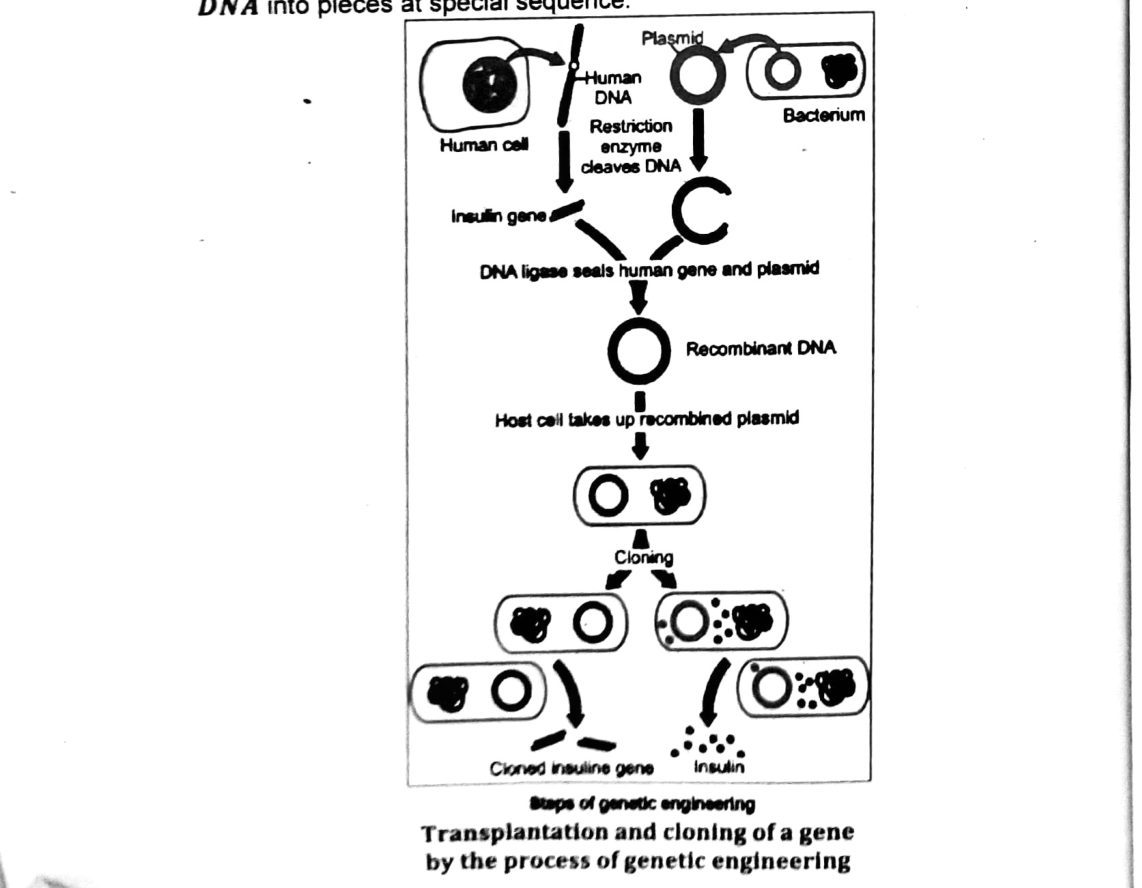
How a gene is transplanted?
Gene transplantation:
Following are the basic steps in genetic engineering for gene transplantation.
- Gene of interest:
A gene is identified that controls a trait in which scientists are interested. DNA containing that gene is collected from the donor organism that naturally has this gene. - Vector selection:
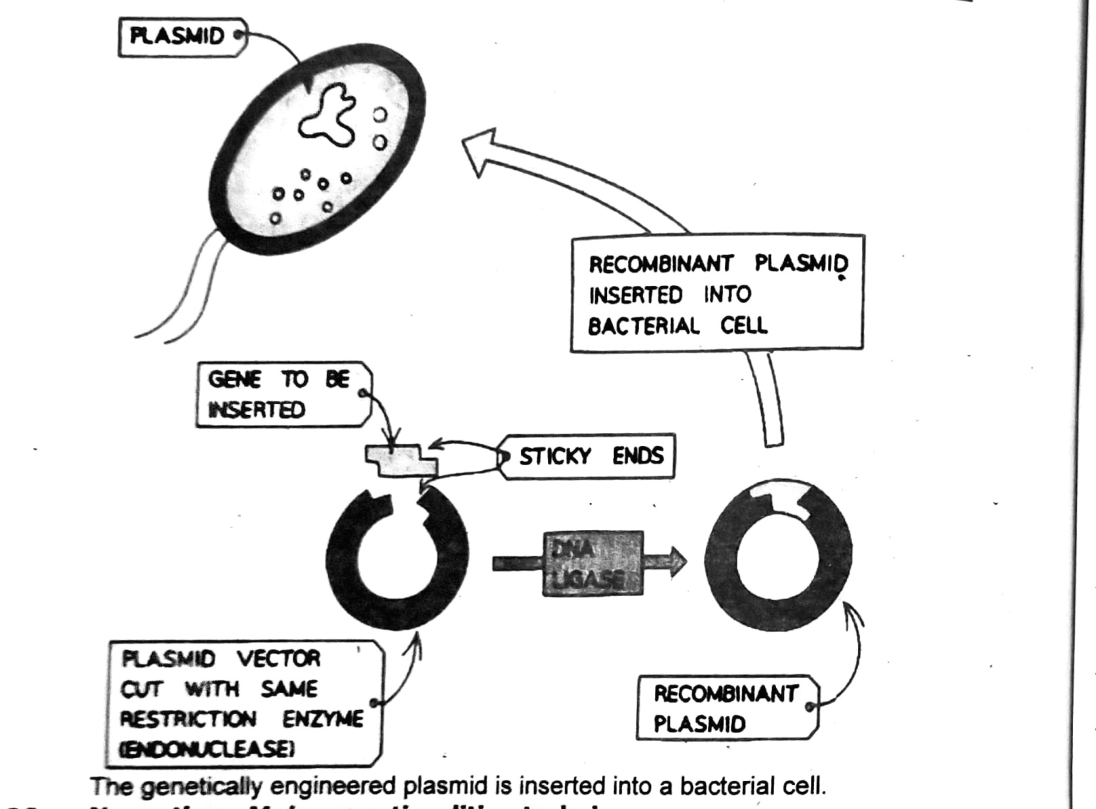
Scientists isolate plasmid DNA (extra-chromosomal ring of DNA) from bacteria. This ring of DNA will carry the gene to the new organism. The plasmids or bacteriophage viruses can serve as a vector. - Restriction endonuclease:
The donor DNA and the plasmid DNA are mixed with restriction endonuclease enzyme (cutting enzyme). This enzyme cuts both kinds of DNA into pieces at special sequence.
- Formation of recombinant DNA:
The pieces of DNA which have complementary sequences join together to make a complete plasmid. This plasmid is now a ring of DNA that has a new gene in it so it is called recombinant DNA. DNA ligase (joining enzyme) is used to make bond between two types of DNA. - Transfer of recombinant DNA into host:
The recombinant DNA is mixed with other bacterial cells. Some of these bacteria will take the plasmids into their cells by a process called transformation. The cells containing the gene are identified and separated. These are genetically modified organism (GMO). - Growth of the GMO:
Colonies of GMO are provided suitable growth conditions, as in fermenter. - Expression of the gene:
The GMO contains the gene of interest and produces the desired product, which is separated from culture medium.
Importance of Gene Editing in Agriculture:
Gene editing techniques, such as CRISPR-Cas9, play a crucial role in improving agriculture by enabling precise, efficient, and targeted changes in plant and animal genomes. Here's how they contribute:
- Improved Crop Yields:
Gene editing can enhance traits like faster growth, better nutrient use, and increased productivity, helping meet global food demand. - Pest and Disease Resistance:
Crops can be edited to resist pests, fungi, bacteria, and viruses, reducing the need for chemical pesticides. - Drought and Climate Resilience:
Plants can be made more tolerant to drought, heat, and salinity, allowing them to grow in harsh environments affected by climate change. - Enhanced Nutritional Value:
Gene editing can improve the content of vitamins, minerals, and proteins in crops (e.g., iron-enriched rice, high-protein maize). - Reduced Use of Chemicals:
By creating disease-resistant and hardy crops, the dependence on fertilizers and pesticides is lowered, promoting eco-friendly farming. - Faster Breeding:
Traditional breeding takes years; gene editing accelerates the development of improved varieties with desired traits.